Thalia Hall: Pilsen's Bohemian Opera House, Silent for Decades and Loud Again
November 2, 2026
A public hall above the shops
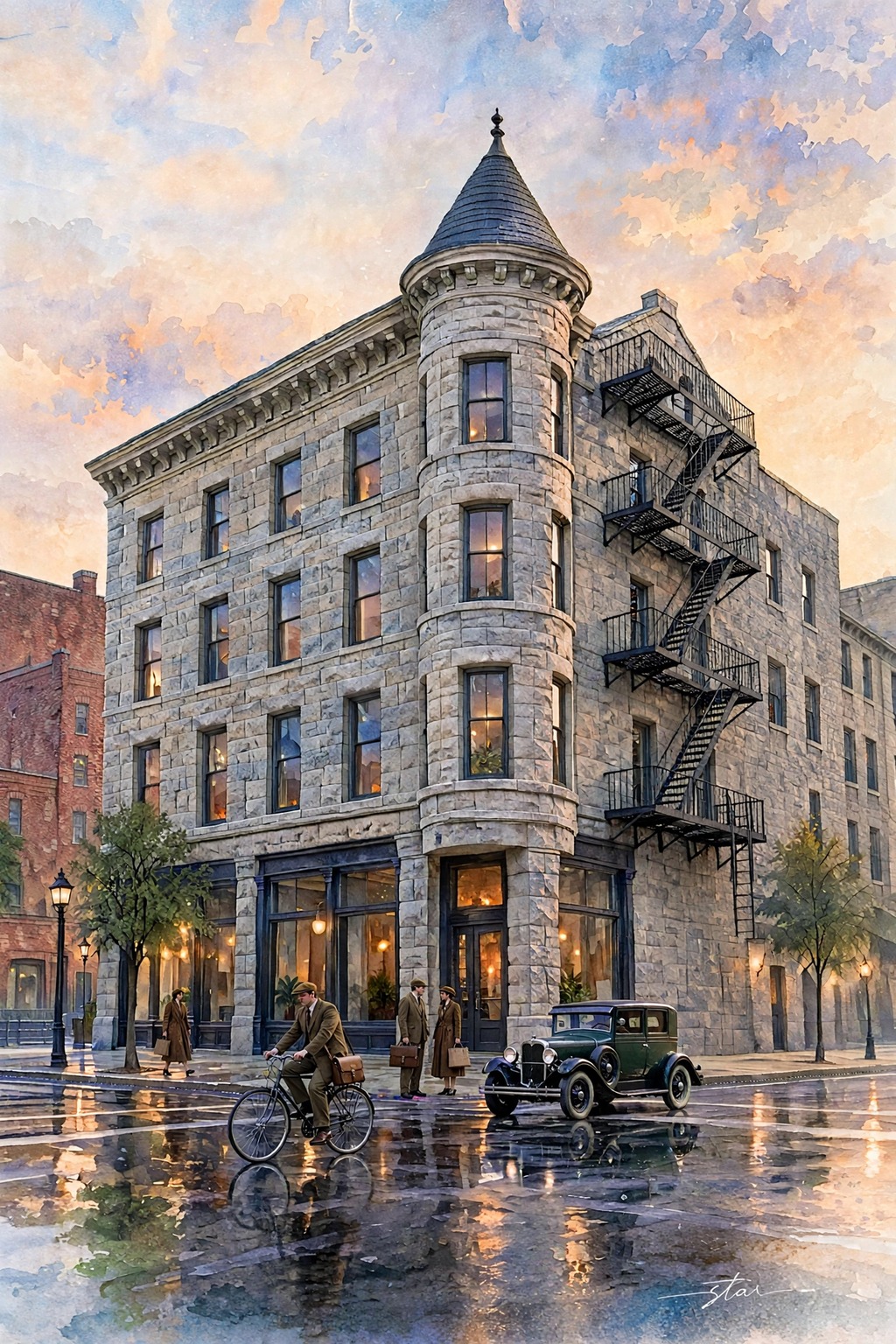
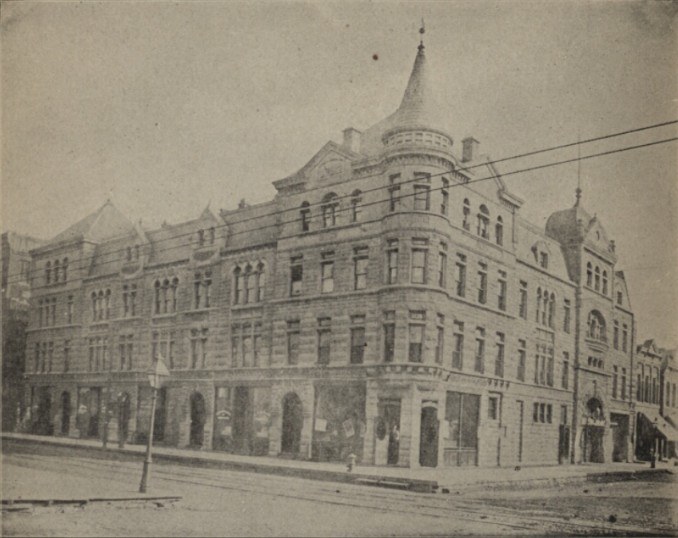
Thalia Hall occupies the corner of 18th Street and Allport in Pilsen, where a public theater, apartments and shops were planned as one property. John Dusek, a Bohemian immigrant and saloonkeeper, commissioned the building to give his neighborhood a professional stage and a place to gather. Its rough limestone, arches and corner tower announce a more ambitious project than an ordinary meeting room.
The City of Chicago lists the construction year as 1892. The city's 1988 landmark report gives a more detailed sequence: a building permit on April 25, 1892, construction through that year, and completion by the end of April 1893, when the Ludvik Dramatic Players performed there. That distinction explains why histories can associate the hall with both years.
Dusek already had a saloon on Allport immediately south of 18th Street. He combined that site with the adjoining corner property. Stores and apartments would bring in rents alongside the theater's income, making the cultural ambition part of a practical real estate development. Dusek, his wife Amerka and their three children were among the original residents.
Why Pilsen needed a stage
The Bohemian community expanded quickly after Chicago's Great Fire of 1871. The landmark report estimates its population at 45,000 by the late 1880s. Pilsen was close to railroad yards, lumber businesses, garment factories and the McCormick Reaper Works. Employment helped draw residents; organizations and performances helped them maintain a shared cultural life in a new country.
That community was not politically uniform. Benevolent associations, labor organizations, amateur musicians, dramatic societies and a Free Thought organization all needed rooms. Public halls supplied space for lectures, dances, meetings and performances before radio and cinema changed everyday entertainment. Dusek's scheme put several kinds of neighborhood activity within the same building rather than assigning the property a single purpose.
The name Thalia referred to the Greek muse of comedy and pastoral poetry. It identified the hall as a place for performance, not simply a room for rent. The landmark report gives its projected cost as $145,000, compared with $75,000 to $100,000 for a typical hall of the period. Much of the difference went into its unusually elaborate appointments.
Faber and Pagels design a mixed-use landmark
Frederick E. Faber and William F. Pagels designed the complex. Faber was born in Copenhagen in 1852, trained in art, architecture and civil engineering, and moved to Chicago in 1879. His partnership with Pagels began in 1888. Their practice included residential commissions for prosperous central European immigrants as well as larger institutional work.
Along 18th Street, the four-story section contained five ground-floor commercial spaces and twenty-one apartments above. Rough rusticated masonry gives the lower facade weight. Smooth bands, clustered columns and arched openings break up that mass. Differently shaped towers and several roof forms keep the skyline varied rather than making the street frontage a symmetrical block.
The theater was a separate but connected part of the plan, opening toward Allport. Its monumental entrance arch and tower marked the way upstairs. Cast-iron stairs with decorated balusters led to the second-floor hall. Dusek's corner saloon had an enclosed connection to the theater, giving people attending an event an easy route to his other business.
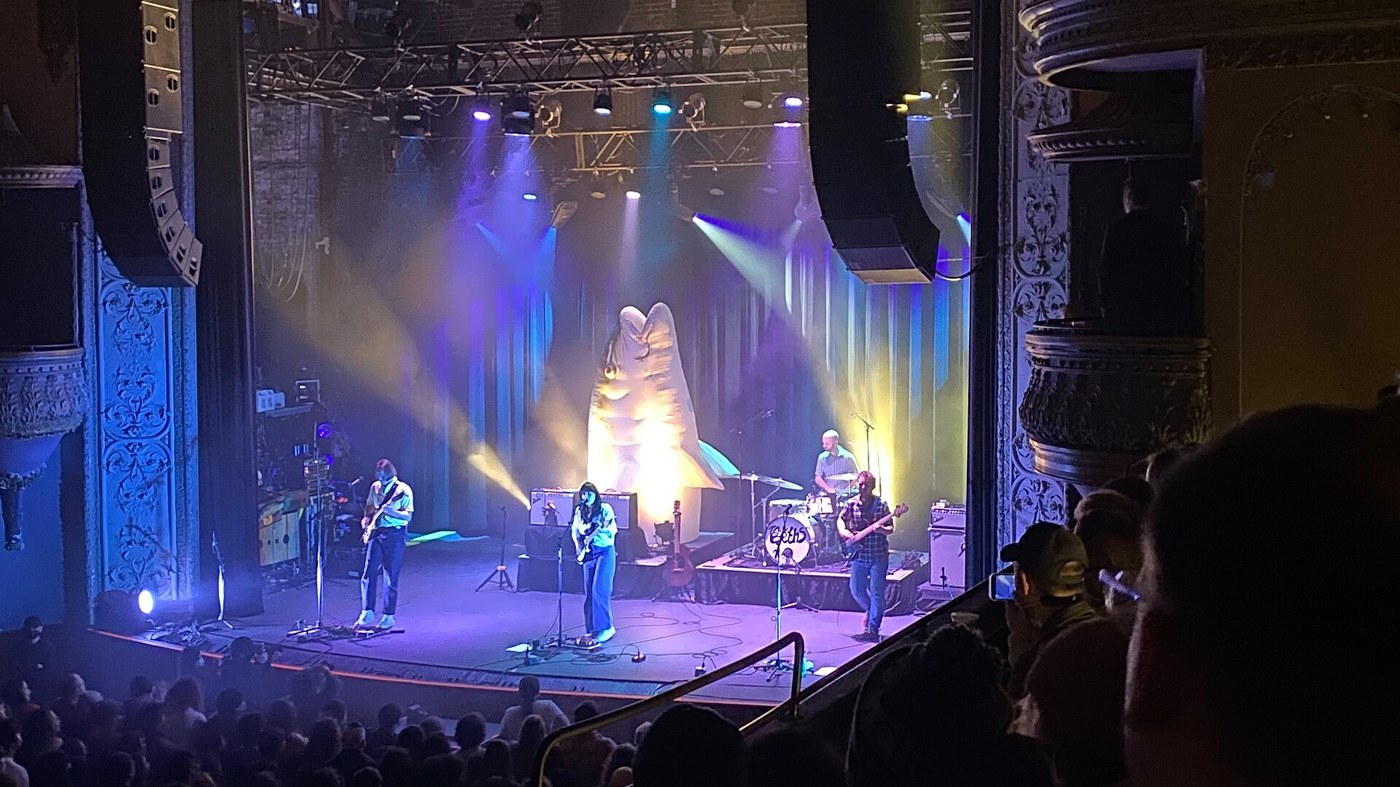
The auditorium combined a proscenium stage and scenery loft with a flat floor that could accommodate different chair arrangements or dancing. A gallery wrapped around three sides. Ornamental boxes flanked the stage. Large south-facing windows could admit daylight, while iron shutters allowed the room to be darkened. These choices supported both theatrical productions and community gatherings.
City landmark sources describe the interior as modeled after Prague's Old Opera House. That reference mattered in a neighborhood whose residents knew Czech theater as part of their own culture. The Romanesque Revival exterior, meanwhile, belonged to a familiar Chicago architectural language. The building joined an immigrant cultural reference to the masonry streetscape of its adopted city.
The Ludvik players make Chicago their home
Frantisek Ludvik brought his professional Czech-language company to the United States in 1893, supported in part by Bohemian-American donors. After performances in several cities, the troupe reached Chicago during the World's Columbian Exposition. Its appearances at Thalia Hall connected a neighborhood stage to a much larger circuit of touring performers and immigrant audiences.
A successful Chicago presentation of Smetana's The Bartered Bride helped persuade Ludvik to remain in America. Most of his company stayed, adopted the name Ludvik's Bohemian Dramatic Society of Chicago, and made Thalia Hall its home stage for the winter season. The hall became informally associated with the players even while other groups continued to use it.
The repertory included traditional Bohemian drama and operetta, along with Shakespeare, Moliere and other writers in Czech translation. Company members also wrote plays about immigrant life in America. When they toured Bohemia in 1898, works such as Heart of Chicago carried their American experience back across the Atlantic. The exchange ran in both directions.
Ludvik died in 1910, but his wife Bohumila and their son continued the company. A twenty-fifth-anniversary celebration in 1918 included original touring members, their children and returning performers. The landmark report traces the society's work at Thalia through 1920. This was a sustained professional institution, not a short-lived novelty attached to the exposition.
Politics, films and a long quiet period
The room also hosted public debate. WBEZ records a gathering of 2,000 women and men in 1895 to hear speakers on women's work and advancement, and a Hungarian revolutionary anniversary celebration in 1898. During the First World War, Thalia was one of the meeting places supporting an independent Czech homeland. Its importance extended beyond ticketed entertainment.
Films and newsreels joined the program during the war years. In 1920 the theater closed temporarily for conversion to a movie house. The dramatic society retained offices there but increasingly performed elsewhere. The change was gradual: some stage productions returned, but the regular use of the room had shifted toward the screen.
As Czech residents dispersed into other neighborhoods and immigration patterns changed, the organizations that had supported the hall lost members. The Great Depression added financial pressure. The theater remained in use into the mid-1960s, then entered a long inactive period. When the city studied it in 1988, much of the original interior detail still survived.
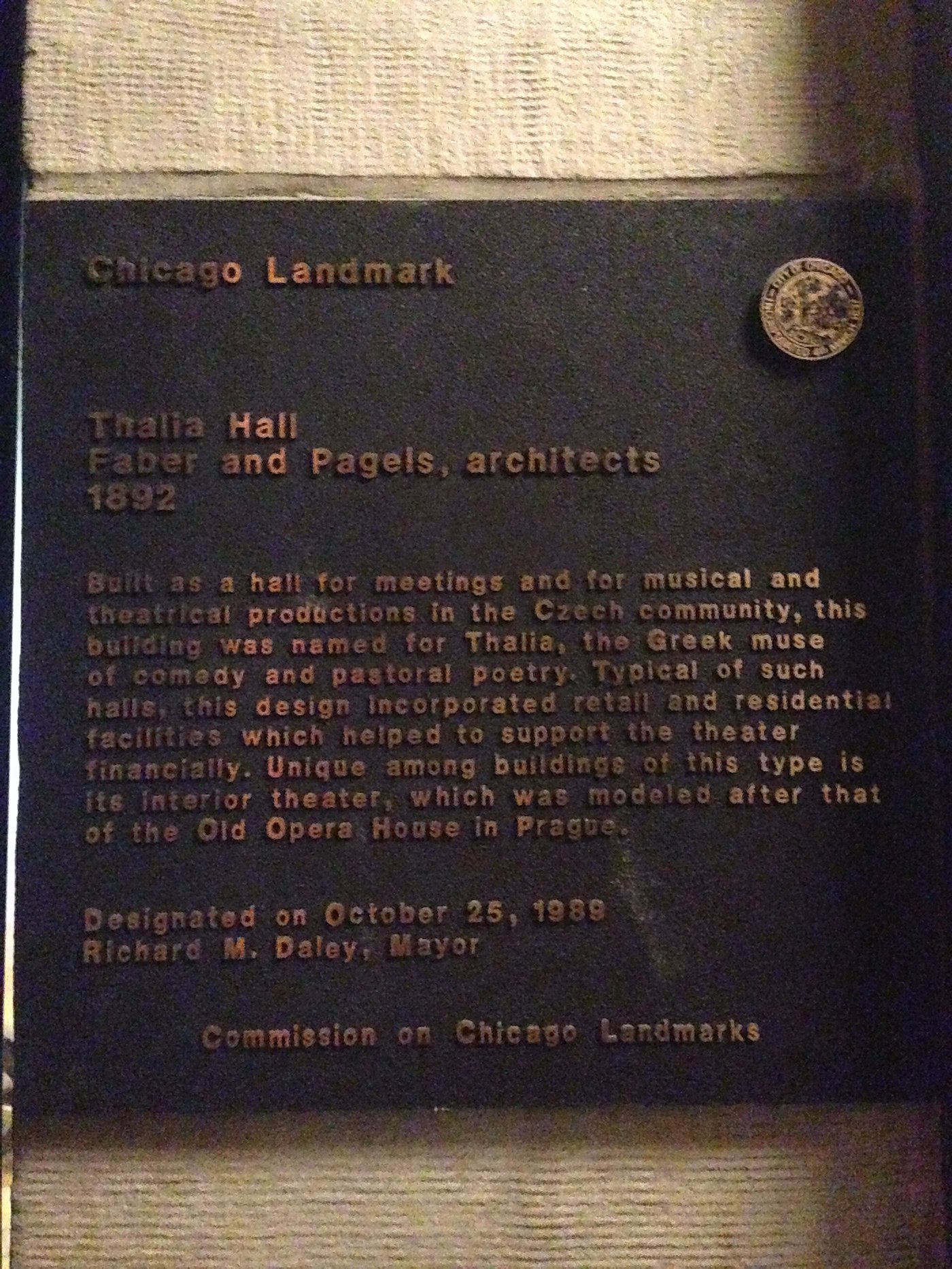
The official Chicago Landmark designation is October 25, 1989. The venue's About page gives 1985, but the city record and the installed landmark plaque agree on 1989. Preservation protected a mixed-use neighborhood building, including its theater history, rather than merely recognizing a decorative facade.
Restaurants in 2013, concerts in 2014
Bruce Finkelman and Craig Golden acquired the property in 2013. WBEZ's 2024 account, citing the Cook County Clerk, reports a $3.2 million bank sale to an LLC they operated. South Side Weekly's contemporary coverage also reported that price and considered the revival alongside concerns about neighborhood change. The reopening was a business investment as well as a preservation project.
The sequence matters. Dusek's restaurant and Punch House opened in September 2013, but the concert hall's official first show was Panda Bear on May 21, 2014. The venue itself confirms that date. It also records an earlier Martin Van Ruin live recording session during construction in November 2013. Those were different milestones, not competing opening dates.
The restored hall kept its balconies, boxes and ornate proscenium while returning the room to regular performances. Chicago Screenshots identifies a 2022 exterior appearance in Power Book IV: Force; its published still shows the entrance columns beside Allport Street. That documents a screen appearance, not a claim that the auditorium supplied the interiors. The still is linked rather than reproduced here.
Who owns and operates Thalia Hall?
The venue identifies Finkelman and Golden with the 2013 revival, and the property remains part of the 16 on Center group. The clearest ownership account checked here is WBEZ's 2024 report of their acquiring LLC. That dated report should not be mistaken for a new title search. The concert venue, restaurant and bars also have separate public-facing identities within the complex.
Visiting Thalia Hall
The concert entrance is 1807 South Allport Street. The landmark's street frontage is listed as 1215-25 West 18th Street. This is a working venue, not a museum with daily public touring hours. Check the specific show's doors, start time, age restriction and ticket type on the official site. The box office opens on show nights at doors.
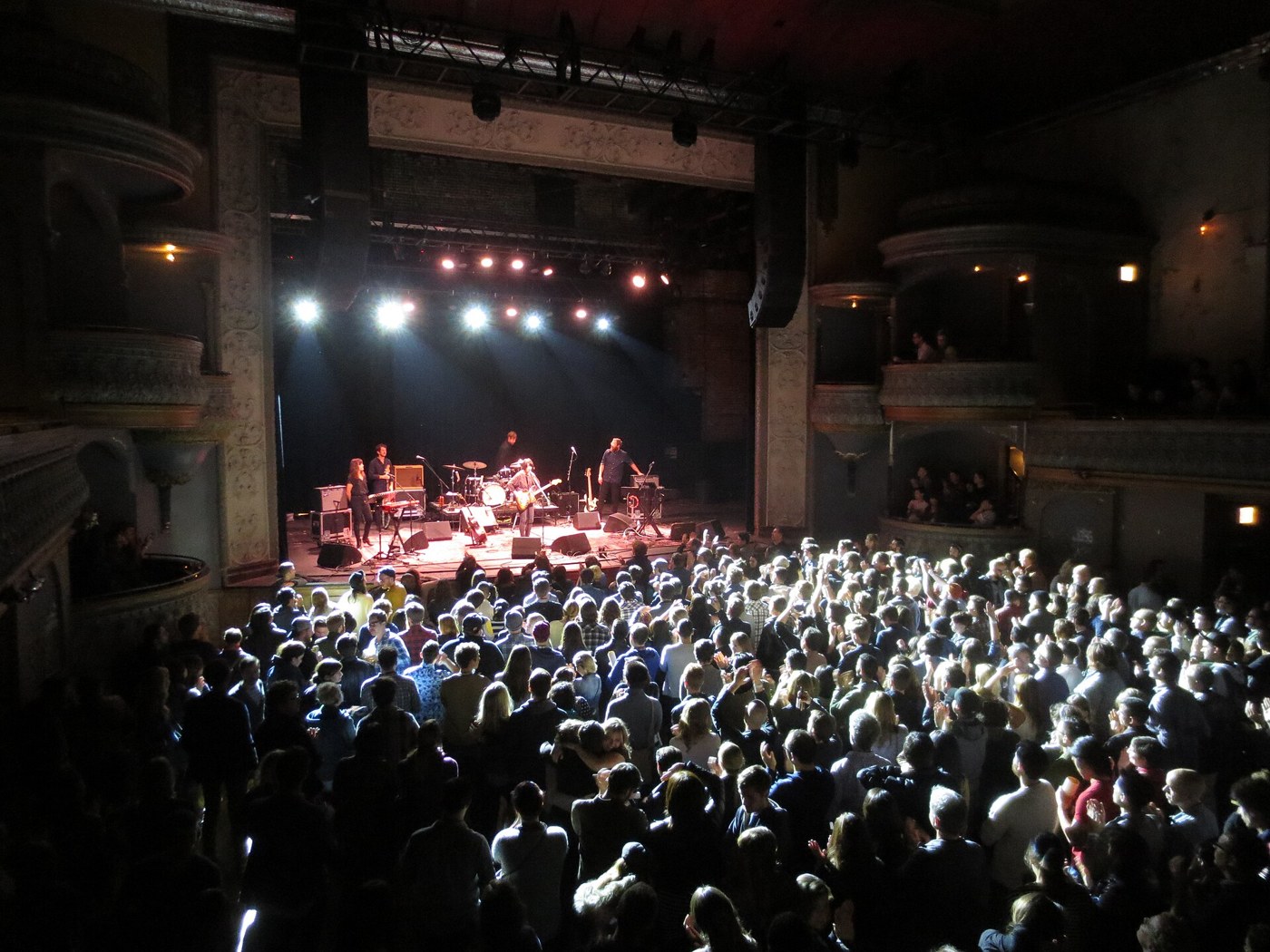
The official FAQ also lists Friday box-office hours of 10 a.m.-1 p.m., while the homepage emphasizes show nights. Confirm that daytime window before making a special trip. Most shows have a standing general-admission floor unless advertised otherwise. Balcony seating and opera boxes are separate ticket arrangements; a concert ticket should not be assumed to include a particular seat.
A passenger elevator reaches the main theater and balcony, and the venue asks guests to discuss accommodation needs in advance. The opera boxes require stairs. For transit, the CTA's accessible 18th Pink Line station is at 1710 West 18th Street, west of Allport; its listed bus connection is route 18. Check current service and your return trip before traveling.
Where can you eat or drink at Thalia Hall?
Mariscos San Pedro now occupies the former Dusek's restaurant space at 1227 West 18th Street. Its official hours, checked November 9, 2026, are Monday-Thursday 5-9 p.m., Friday 5-10 p.m., Saturday brunch 11 a.m.-2:30 p.m. and dinner 5-10 p.m., and Sunday brunch 11 a.m.-2:30 p.m. and dinner 5-9 p.m. The site warns that hours may vary.
Punch House lists Monday-Thursday 5 p.m.-1 a.m., Friday-Saturday 5 p.m.-2 a.m., and Sunday 5 p.m.-midnight. Tack Room, in the former stable space, lists programmed nights from 6 p.m. and Saturdays from 2 p.m. These hours were checked on their official sites on November 9, 2026. Confirm the current schedule, especially on holidays and performance nights.
The venue recommends allowing an hour and a half for dinner before going upstairs and says restaurant food cannot be taken into the hall. That practical separation reflects the building's original arrangement: several businesses and uses share one address, but each keeps its own entrances, schedule and rules.
Sources
- City of Chicago: Thalia Hall landmark record
- Chicago Landmarks: 1988 staff report
- Thalia Hall: history
- WBEZ: Thalia Hall (2024)
- South Side Weekly: A Hall Reborn, a Neighborhood Altered (2013)
- Thalia Hall: Martin Van Ruin and the official May 2014 opening
- Thalia Hall: visitor FAQ and access
- CTA: 18th Pink Line station
- 16 on Center
- Mariscos San Pedro: hours and location
- Punch House: hours
- Tack Room: schedule and hours
- Chicago Screenshots: Thalia Hall in Power Book IV: Force