The Chicago Board of Trade Building: The Art Deco Tower at the End of LaSalle Street
October 28, 2026
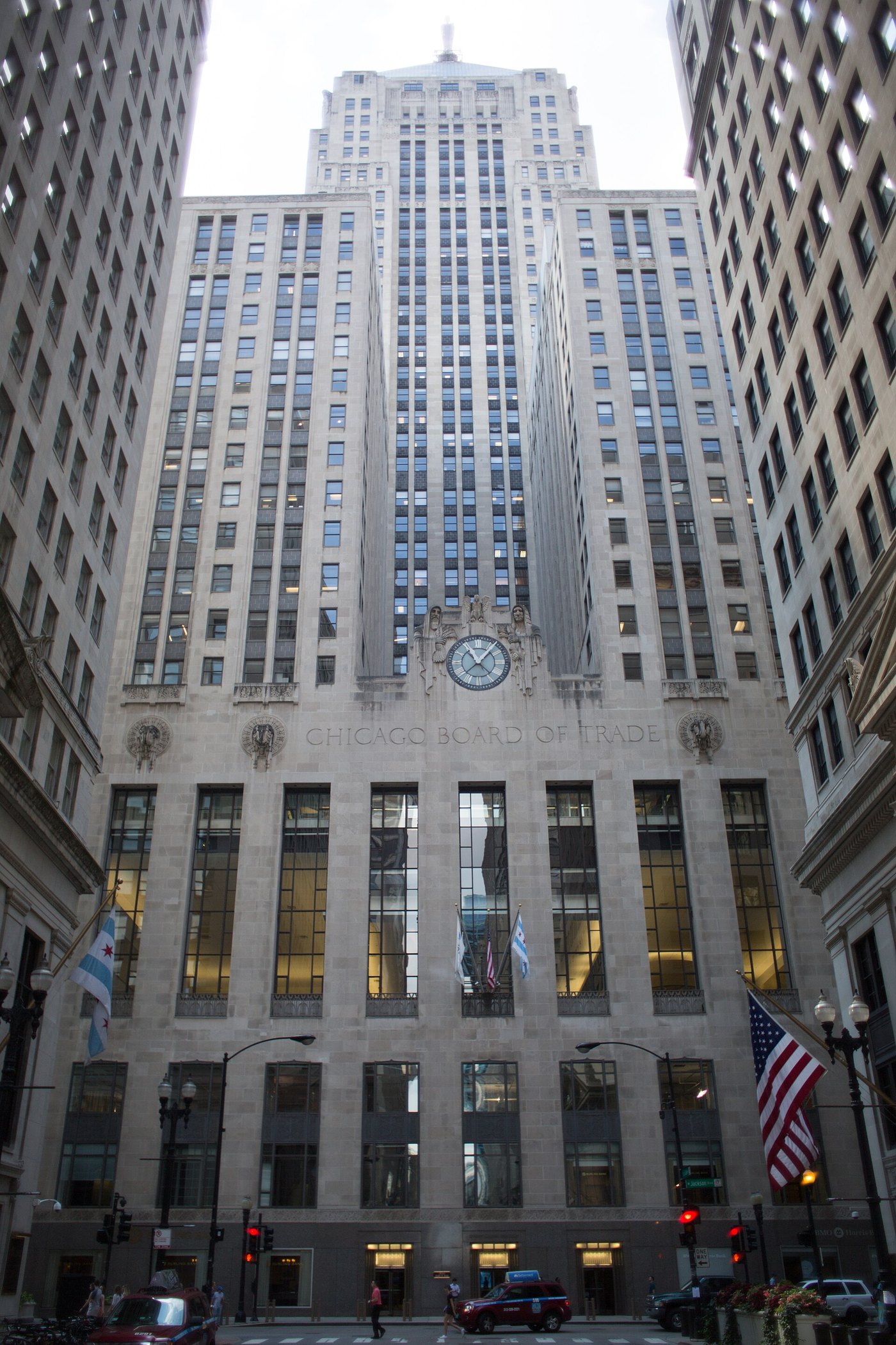
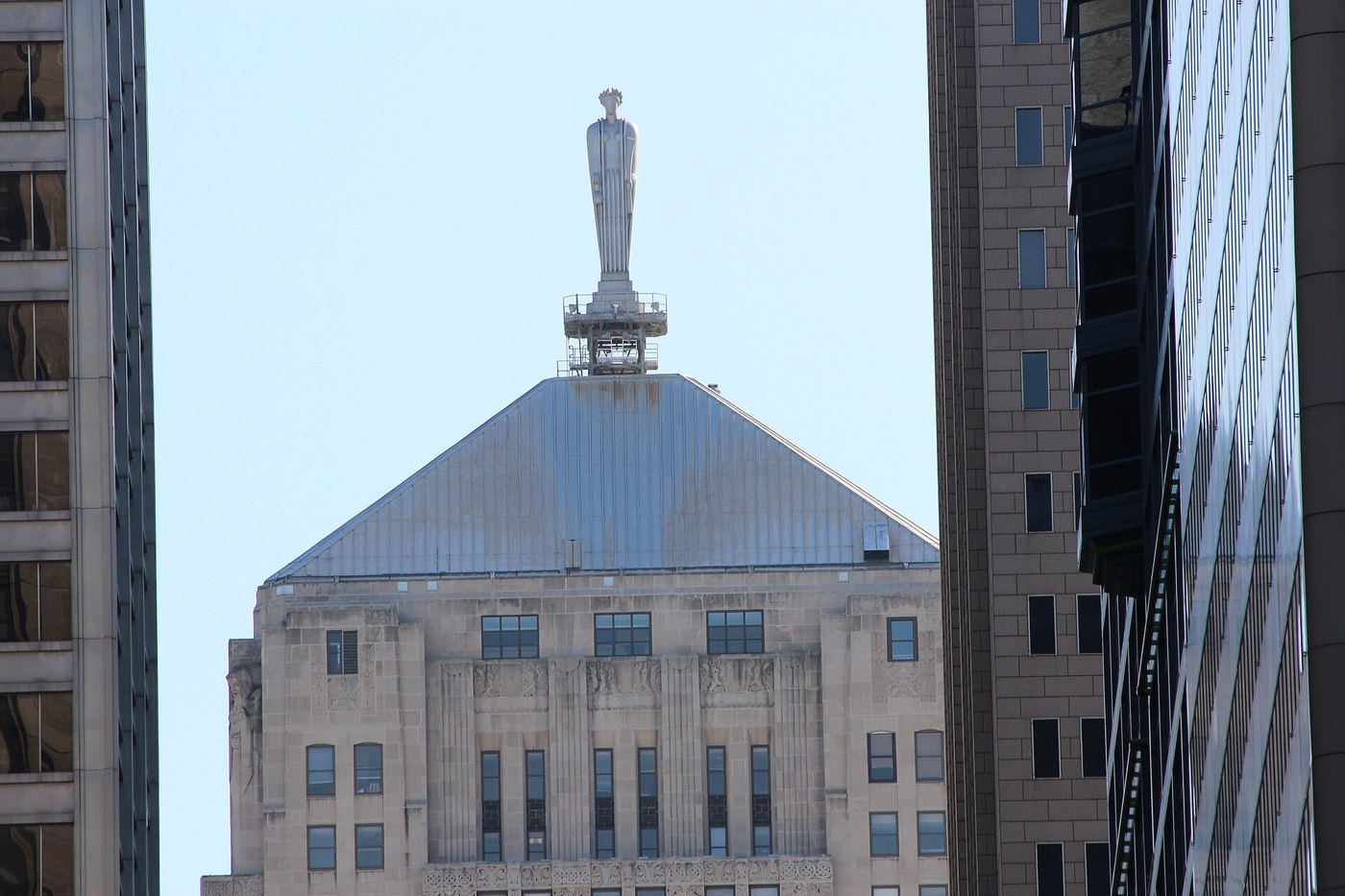
At the south end of LaSalle Street, the canyon of bank and office towers stops at a wall of limestone. The Chicago Board of Trade Building at 141 West Jackson Boulevard rises 44 stories, topped by a pyramid roof and a three-story aluminum statue of Ceres, the Roman goddess of grain. Built in 1930, it was the tallest building in Chicago until the Richard J. Daley Center passed it in 1965, and it was the first in the city to go above 600 feet.
The Board of Trade is older than the building by more than eight decades. It held its first meeting in 1848 in a room above a flour store on South Water Street. The building most people know today is its third permanent home at the foot of LaSalle Street. This article follows the exchange, its two buildings and the tower's own ownership story, which has been more turbulent than the stone suggests.
A first headquarters with a clock tower
After the Great Fire of 1871, the Board of Trade rebuilt on the same site at LaSalle and Jackson. In 1882 it began a new headquarters designed by William W. Boyington, the architect best known for the Chicago Water Tower. The building opened in 1885. It stood ten stories with a clock tower about 320 feet tall, and it was built of steel and granite quarried in Maine. According to Wikipedia, it was the first commercial building in Chicago to use electric lighting, and for a time it was the tallest building in the city.
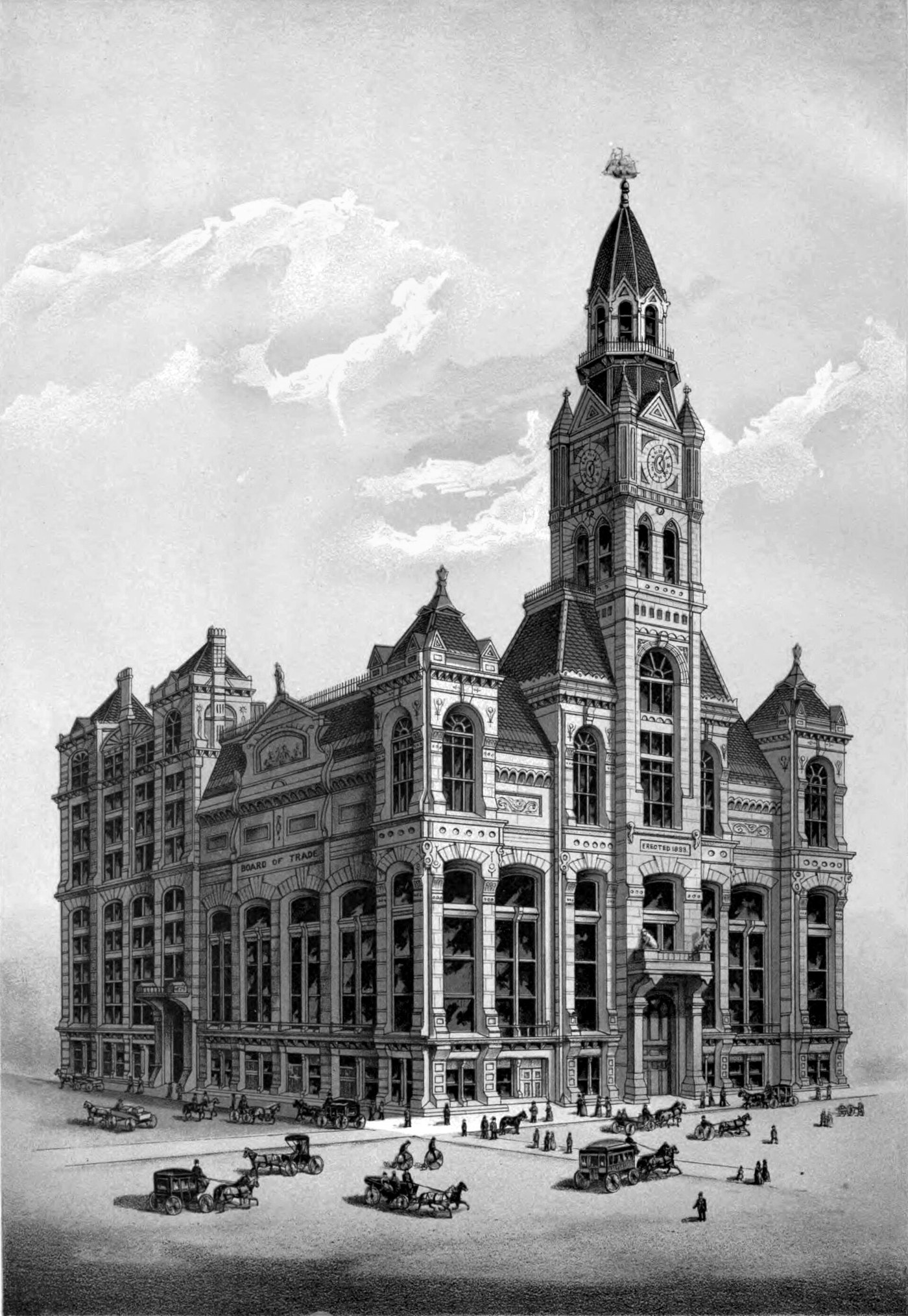
The opening was not purely a celebration. A column of labor activists, led by Albert and Lucy Parsons, marched on the building that evening. The sources describe the new headquarters, which cost about $1.8 million during an economic depression, as a symbol of everything the marchers opposed. Police stopped them blocks from the doors.
The building did not last. It stood on caissons in soft ground, and when construction began across the street on the Federal Reserve Bank of Chicago in the 1920s it became structurally unsound. The 1885 tower was demolished in 1929, and the exchange moved temporarily while a replacement went up on the same corner.
Holabird & Root's tower
The Board of Trade hired Holabird & Root in 1925. The finished building cost about $11.3 million and opened on June 9, 1930, clad in gray Indiana limestone. It has setbacks that step in as the tower rises, and at night they were lit from below, a Chicago habit also seen on the Wrigley Building and Tribune Tower. Its elevators ran on cables made by the John A. Roebling firm, the same company that supplied the cables for the Brooklyn Bridge.
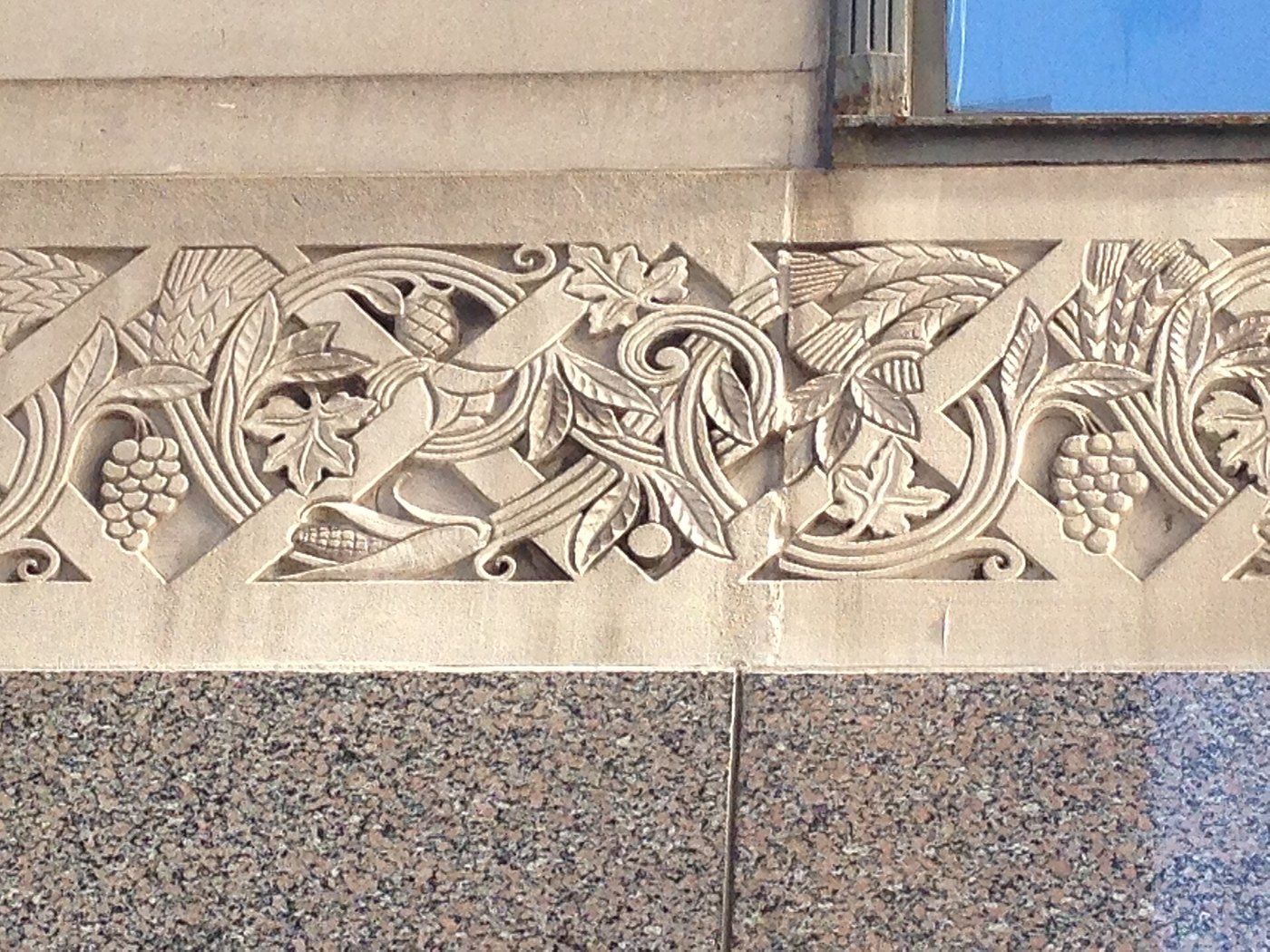
The sculptor Alvin Meyer, who headed Holabird & Root's sculpture department, covered the facade with figures that tell you what happens inside. A 13-foot clock faces LaSalle Street. On either side of it are hooded figures, a Babylonian holding grain and a Native American holding corn. Higher up, bulls project from the stone, a reference to a bull market. The first tenant to move in, on May 1, 1930, was not an exchange member at all. It was the Quaker Oats Company.
Ceres, aluminum and 6,500 pounds
The statue on top is by John H. Storrs. Wikipedia lists it at 31 feet tall and 6,500 pounds, assembled from 40 pieces of aluminum. Ceres holds a sheaf of wheat in one hand and a bag of corn in the other. The figure is a reminder that the exchange began as a grain market, and that corn, wheat and soybeans were traded in pits on the fourth floor.
The pits and the additions
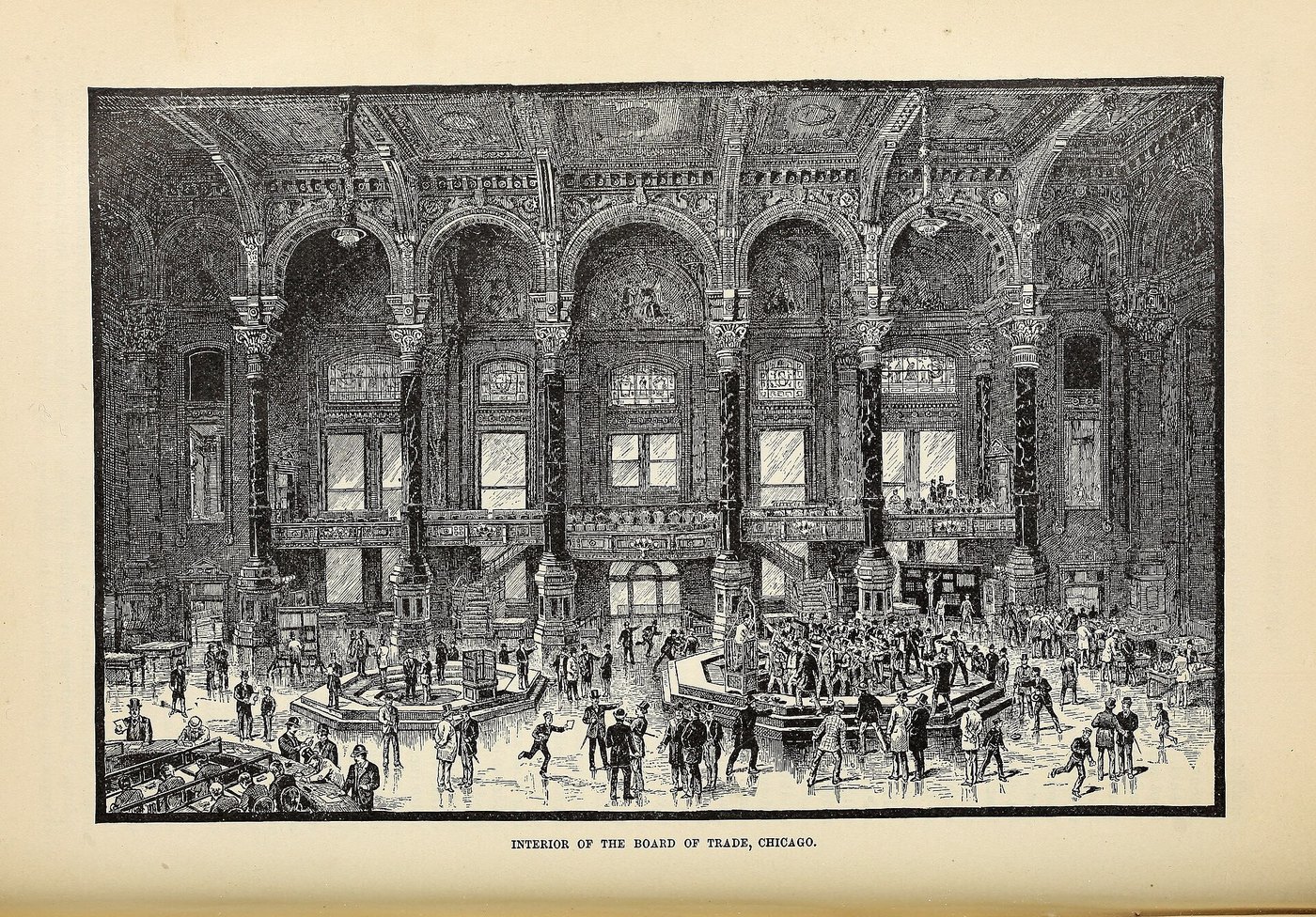
The original trading room was on the fourth floor, directly behind the large windows under the clock, and it was billed at the time as the world's largest trading floor. Traders worked in raised octagonal pits where open outcry set prices. The exchange kept growing. In 1980 a 23-story addition by Helmut Jahn, in black and silver, went up on the south side with its own agricultural trading floor. A five-story addition to the east followed in 1997, which some people nicknamed the "Arboretum" after the exchange chairman Patrick Arbor.
Electronic trading ended most of this. In 2004 the historic 1930 trading floor was demolished and its pits were filled with concrete, according to Wikipedia. The space was renovated and leased to a privately owned options trading firm. CBOT and the Chicago Mercantile Exchange merged into the CME Group in 2007.
Landmark and restoration
The building became a Chicago Landmark in 1977. In 1978 it was named a National Historic Landmark and listed on the National Register of Historic Places. A $20 million renovation led by the Chicago architect Gunny Harboe in 2005 restored the lobby, upgraded the elevators and cleaned the facade. That same year two granite figures from the 1885 building, Industry and Agriculture, were returned to the plaza in front of the tower. They had been moved to the estate of a wheat speculator in 1929 and were found in a forest preserve in DuPage County in 1978.
Visiting the Board of Trade Building
The building is an active office tower, and entry goes through a security screening. The easiest way in is the Chicago Board of Trade Building Museum, on the first floor near the Jackson and LaSalle corner. The museum's website says it is free, needs no reservation, and is open Monday through Friday from 10 a.m. to 4 p.m., closed on federal holidays and weekends. It covers the history of the pits, trading memorabilia and the traders. These details were read on October 28, 2026. The museum's site also notes that the building is near CTA Red Line stations, bus stops and Metra.
You do not need to go inside to see the building. The best view is from LaSalle Street, looking south at the clock and the statue. The Rookery, a short walk north on LaSalle, makes an easy pairing.
Who owns the Chicago Board of Trade Building today?
Legal title: In January 2023 the Chicago Sun-Times reported, citing Cook County property records, that the owners of the building had surrendered its deed to their lender, Apollo Global Management. CoStar reported in March 2025 that Athene, an Apollo fund, took possession after GlenStar Properties and Oaktree Capital Management walked away from the property they had owned since 2012, and that Athene had provided a $198 million loan in the February 2020 refinancing. The sources name Apollo and Athene, not the exact company that holds the deed.
Operator: CoStar and WTTW name R2 Cos., a Chicago real estate firm, as Athene's local partner in running and improving the building. R2 has spent millions on the lobby, an atrium, a fitness center and a conference center. CME Group remains a tenant under a 15-year lease signed in the 2013 sale, according to Wikipedia. CME kept the smaller east building at 333 South LaSalle.
Land: I found no source that says the land is owned separately from the building.
Still unconfirmed: the exact entity on the deed today, and whether there has been a sale since the March 2025 CoStar report. I found no sale report. The Cook County Assessor's records for 141 West Jackson still show older names, including the Board of Trade, CME Group and Commonwealth Edison, in the owner and mailing fields. Those are tax-bill labels, not the deed. Read October 28, 2026.
Where can you eat or drink at the Board of Trade Building?
Ceres Cafe is in the north lobby of the building. It has served traders since 1967 and moved to its current spot in 1989. Its own website says reservations are by phone at 312-427-3443, and that a food market called Ceres and Cellars is on the lower level. Tasting Table reported in September 2025 that Ceres opens at 7 a.m. and closes at 8 p.m., closed on weekends, and Eater listed a weekday happy hour from 1:30 to 3:30 p.m. in November 2025. I did not find hours on Ceres Cafe's own site, so these are secondary sources read on October 28, 2026. Call or check before going, especially on holidays.
The cafe was mentioned in an episode of the television series The Bear, which has added to its name.
Sources
- Wikipedia: Chicago Board of Trade Building
- CoStar: Historic Chicago building rises from canyon of distress to leasing success (March 26, 2025)
- Chicago Sun-Times: Chicago Board of Trade owner cedes control to lender (January 13, 2023)
- Crain's Chicago Business: Lender seizes Chicago Board of Trade Building (January 11, 2023)
- WTTW: Chicago Board of Trade Building Museum pays tribute to the city's history (July 8, 2025)
- Chicago Board of Trade Building: Museum
- Ceres Cafe
- Tasting Table: Ceres Cafe and The Bear
- Eater Chicago: Happy hour deals
- Cook County Assessor parcel address data (141 W Jackson Blvd)