Why Does Tribune Tower Look Like a Medieval Tower?
October 27, 2026
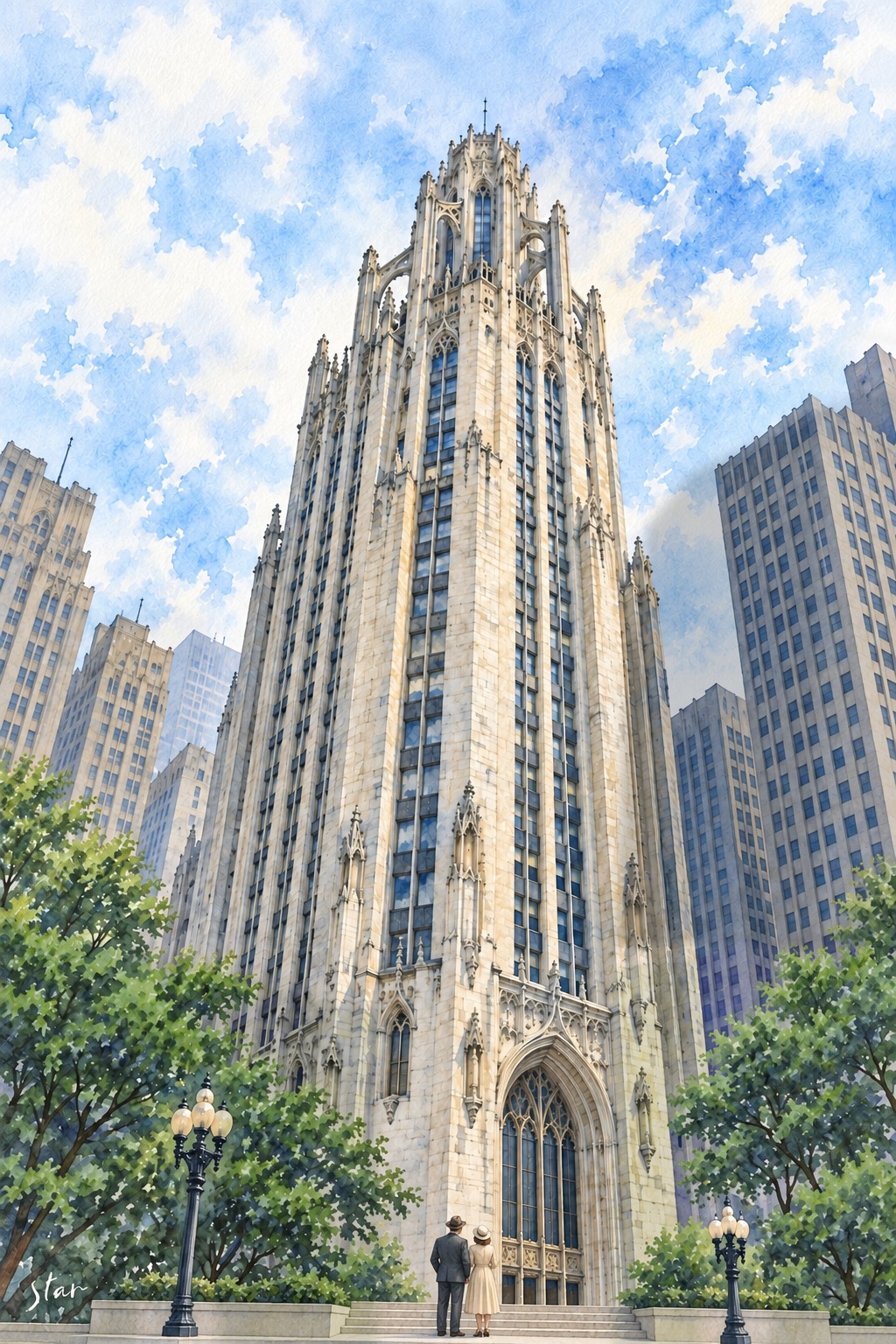
Tribune Tower puts a twentieth-century office building inside a silhouette borrowed from a much older world. Its limestone walls, pointed entrance and buttressed crown are not evidence that Chicago's newspaper industry needed a fortress. They are the outcome of a deliberate architectural choice. When the Chicago Tribune announced an international competition in 1922, it asked for a building that would express the newspaper's importance and improve the city. The winning design made history, permanence and visual drama part of that corporate identity.
A newspaper turns an anniversary into a city event
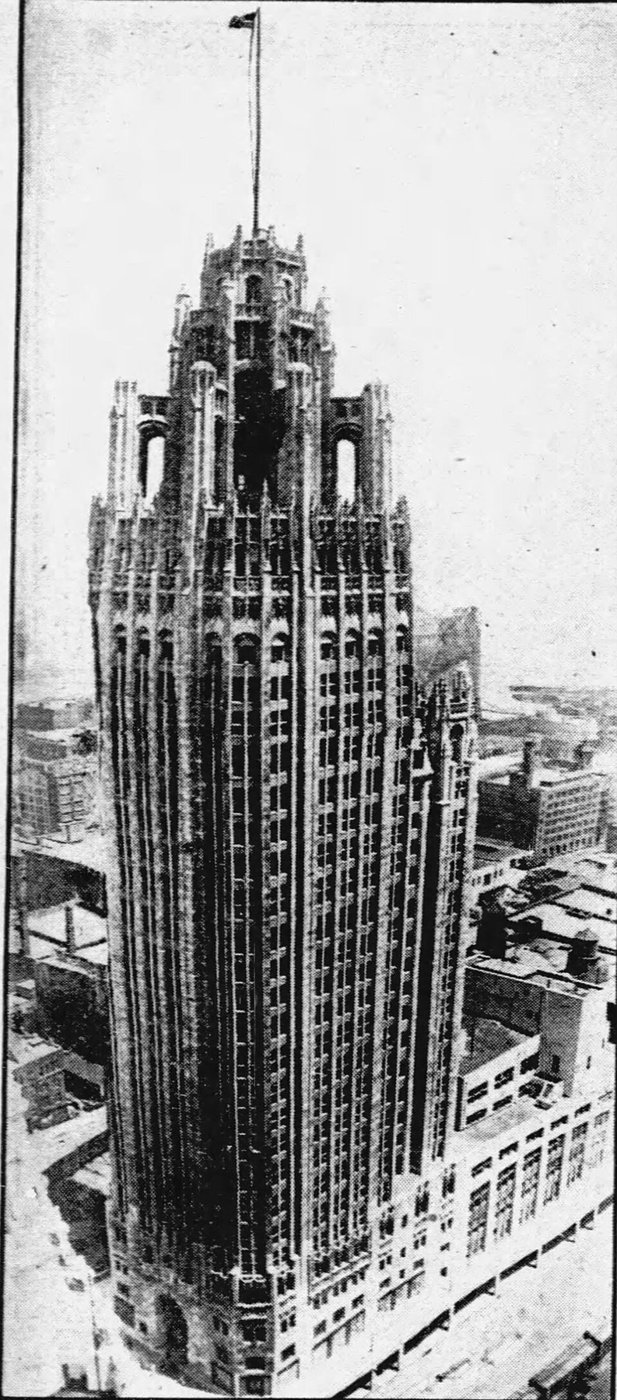
The competition marked the Tribune's seventy-fifth anniversary. The newspaper had first appeared in 1847 and had grown through several downtown addresses. The city's landmark report follows those moves through fires, rebuilding and expansion. By the early twentieth century, the paper's equipment and staff needed more space than its older headquarters could provide. A printing operation was established north of the river, and the planned tower would give that expanding enterprise a conspicuous public face.
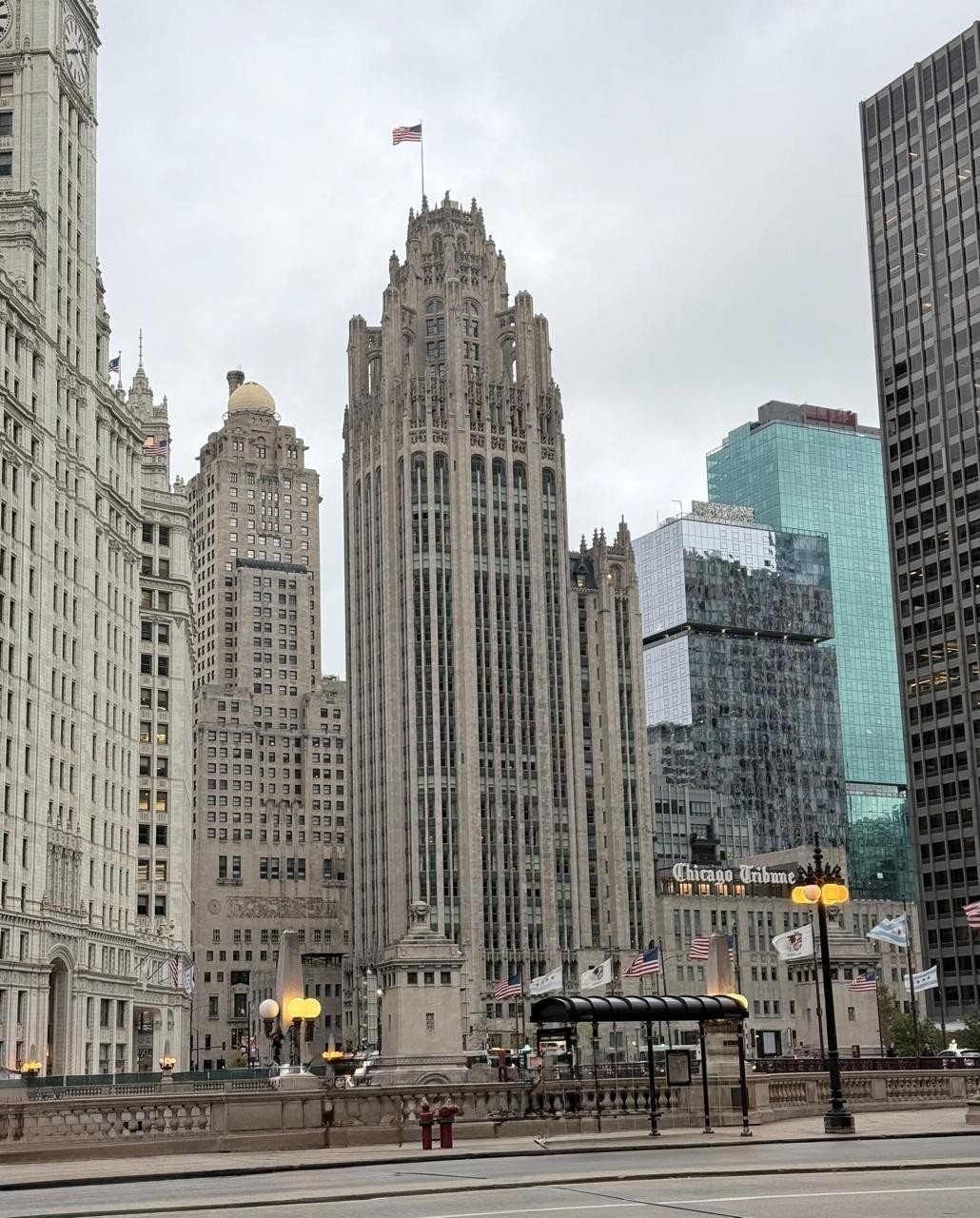
The setting was crucial. The Michigan Avenue Bridge had opened in 1920, connecting the established avenue south of the river with a widened route north. Tribune Tower would stand near that new crossing and beside its printing facilities. This was not a site where a large building could disappear anonymously into a continuous office canyon. The river, bridge and developing boulevard created long views and an opportunity to become one of the city's architectural markers.
Robert R. McCormick and Joseph M. Patterson wanted more than sufficient floor area. The competition offered $100,000 in prizes, including $50,000 for first place, and sought what it called the world's most beautiful office building. That language was promotional, but it also made the design into a public argument. Architects were being asked to show what a powerful modern institution should look like, in a city already identified with tall-building invention.
The competition was bigger than its winner
More than 260 entries came from 23 countries, according to the Chicago Architecture Center and the present building's history. Some used familiar architectural languages; others treated the commission as a chance for a provocative new form. Adolf Loos proposed a giant classical column. Other entries included monumental arches and increasingly simplified tower designs. The range matters because the eventual Gothic solution was not the only imaginable answer to the brief.
The city's landmark study gives particular importance to Eliel Saarinen's second-place entry. Its influence extended into later skyscraper design, even though it was not built for the Tribune. That is one reason the competition has a larger place in architectural history than a normal selection of a commercial architect. Drawings that lost the commission could still circulate, be studied and affect buildings elsewhere. The contest became a record of architectural possibilities in the early 1920s.
Howells and Hood made an office tower work
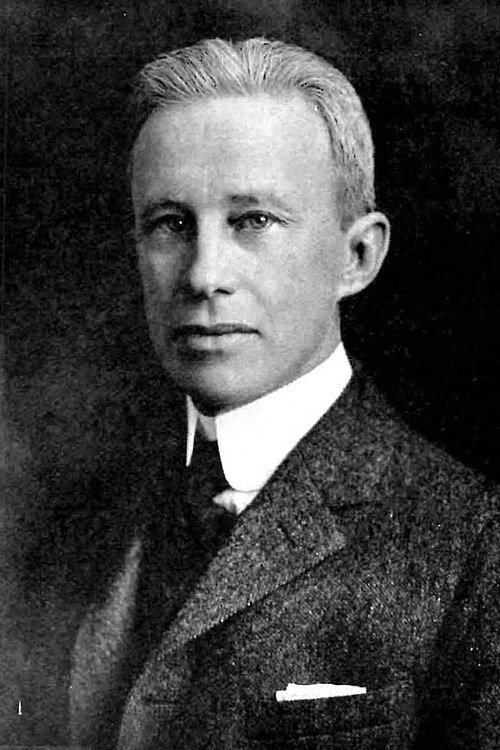
The first prize went to John Mead Howells and Raymond Hood of New York. Their design did not sacrifice the office block merely to produce a sculptural monument. The occupied lower building provided repeated floors of commercial space, while the upper portion supplied the distinctive silhouette. Steel framing carried the structure, and Indiana limestone gave the exterior its material identity. The result could perform as a modern office building while appearing tied to a much longer architectural tradition.
The city report describes a sequence of setbacks that transforms the broad block into a narrower tower. The main shaft gives way to an octagonal upper composition, and prominent piers continue upward into flying buttresses. Those elements recall the Butter Tower of Rouen Cathedral. Tribune Tower is a secular newspaper and residential building, however, not a religious building. The borrowed forms served a different client, construction system and purpose on Michigan Avenue.
The entrance brought the message down to the sidewalk
At street level, the monumental arch translated the tower's Gothic vocabulary to the scale of an arriving person. Carved screens and stone detail gave the base an identity separate from a generic office entrance. The lobby continued the program with travertine, carved oak and inscriptions. The landmark report records quotations and memorial plaques that connected the newspaper's daily work with ideals of public service and freedom of the press.
The building's historic interiors should not be confused with guaranteed public access today. A landmark designation records architectural importance; it does not automatically make every protected room a public attraction. Since the conversion to residences, the prudent visitor's experience is based on the exterior and publicly accessible surrounding spaces unless a current organized visit specifically includes an interior. Historical descriptions of a lobby are not present-day entry permission.
A wall assembled from other places
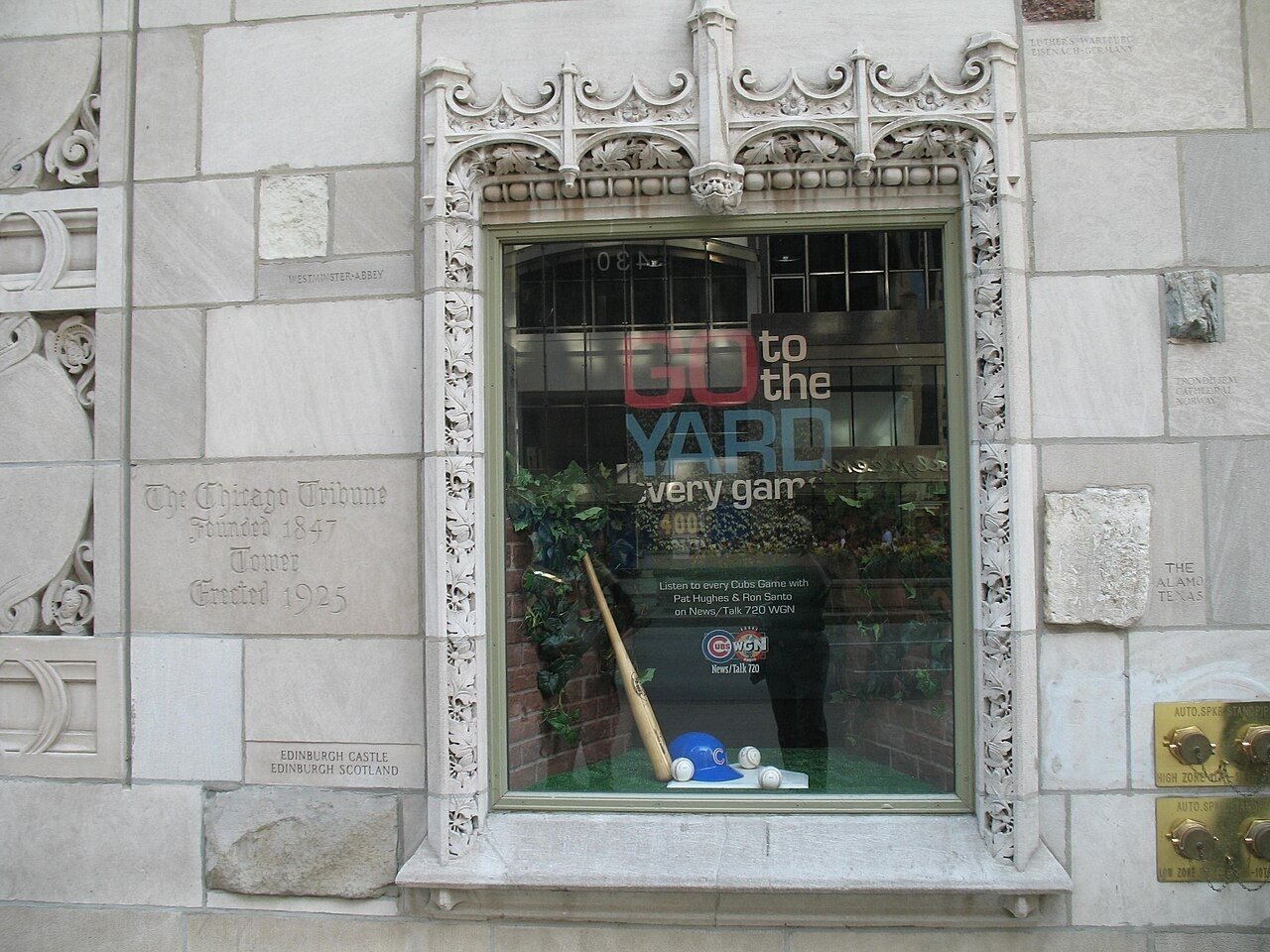
The fragments embedded in the exterior base make another kind of claim. The city's landmark record describes more than 120 stones from famous structures and sites in the United States and abroad. They include pieces associated with the Parthenon and Taj Mahal as well as American places. The Chicago Architecture Center attributes the collecting to McCormick and the newspaper's foreign correspondents over time.
The stones reward close looking precisely because they are different from the rest of the facade. Their textures, dimensions and inscriptions interrupt the building's architectural order. Yet they should be read as a historical collection, not as an endorsement of removing material from monuments today. The fact that a fragment was obtained and displayed in an earlier period does not settle every question about the circumstances under which it left its original place.
The complex kept growing
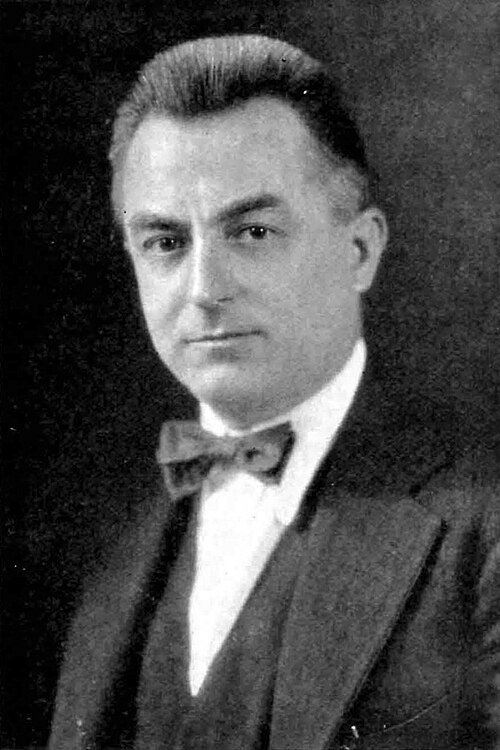
The 1925 tower was not an isolated object frozen at completion. The property's own chronology records a WGN building begun in 1934 and completed in 1935, followed by another addition begun in 1945. A Chicago Tribune sign was installed on the former plant building in 1964, and Pioneer Court was constructed in 1965. The newspaper's real estate evolved with its printing, broadcasting and office needs.
Chicago designated Tribune Tower a landmark on February 1, 1989. By then, its place in the city's architectural identity extended beyond the newspaper's own reputation. The building framed a major river crossing alongside the Wrigley Building and other 1920s commercial towers. Preserving that ensemble meant caring about the relationship between buildings and public space, not only about isolated carved details.
From newspaper floors to homes
CIM and Golub acquired the property in 2016. The building's current history records residents beginning to move into the converted Tribune Tower in 2021. The Chicago Architecture Center now identifies its use as residential. These are important changes in the way the architecture is occupied, even where the familiar exterior remains recognizable. An office tower's repeated workspaces have become homes, with different expectations of privacy and daily routine.
Visiting
The address is 435 North Michigan Avenue. The exterior and embedded stones are the main independent sightseeing experience. This is a residential building, not a generally open observation tower. Do not assume the crown or historic lobby is accessible without an authorized tour or invitation. Retail entrances have their own opening arrangements; shopping access does not grant access to residents' areas.
Grand on the CTA Red Line, at 521 North State Street, is a nearby subway station west of Michigan Avenue. CTA identifies it as accessible, but check current train and elevator notices before traveling. The building's history, current-use listing and transit information were reviewed November 9, 2026. Check any organized tour's exact inclusions before booking.
Famous movies with scenes shot at this building
The Daily Herald's June 26, 2011 report lists Tribune Tower among the Chicago locations used for Transformers: Dark of the Moon (2011). Contemporary NBC Chicago reporting identifies filming in the traffic circle just north of the Michigan Avenue bridge, surrounded by the Wrigley Building, 401 North Michigan Avenue and Pioneer Court. This places real production beside Tribune Tower; it does not establish that a particular scene was filmed inside its lobby or crown.
The distinction matters in an effects-heavy film: a recognizable tower on screen can be a background, a filmed location or a digitally altered image. The available sources do not justify assigning the entire battle to this property. Shia LaBeouf played Sam Witwicky. His accompanying portrait is from Cannes in 2012, not from the Chicago shoot.

Who owns Tribune Tower today?
Tribune Tower has divided ownership rather than one simple newspaper-owner story. CIM Group and Golub & Company bought the property in 2016 and converted much of it into condominiums. Individual residence buyers therefore own homes within the complex; this is not the same as one firm owning every apartment. The Tribune moved out in 2018, and its historic name does not identify the current occupants.
The Real Deal reported June 30, 2025 that North American Real Estate bought the approximately 47,000-square-foot retail portion from CIM and Golub. The current Shops at Tribune Tower website identifies it as a NARE Group property, providing current operator confirmation of the retail relationship. This does not establish ownership of every residential unit or common element. No unit-by-unit deed search was undertaken. Ownership and operation descriptions were reviewed November 9, 2026.
Where can you eat or drink at Tribune Tower?
Blue Bottle's Tribune Tower page currently marks every day closed. Confirm directly before planning a coffee stop.
The Shops at Tribune Tower also lists FARE as opening soon. That is not an established operating schedule, so do not plan a meal around it until the operator confirms it has opened. Older coverage of Foxtrot's 2022 opening is not proof of present service.
Sources
- City of Chicago: Tribune Tower landmark report (1986)
- Chicago Architecture Center: Tribune Tower
- Tribune Tower Residences: History
- City of Chicago: Tribune Tower landmark record
- The Real Deal: Tribune Tower retail space changes hands, 2025
- Golub & Company: Tribune Tower Residences
- The Shops at Tribune Tower: current retail directory
- Blue Bottle Coffee: Tribune Tower cafe
- CTA: Grand Red Line station
- Daily Herald: Transformers filming locations, 2011
- NBC Chicago: 2010 street filming
- Pencil Points, January 1923: architects and competition