The Green Mill: What Is Documented About Uptown's Jazz Club and the Gangsters, and What Is Legend
October 30, 2026
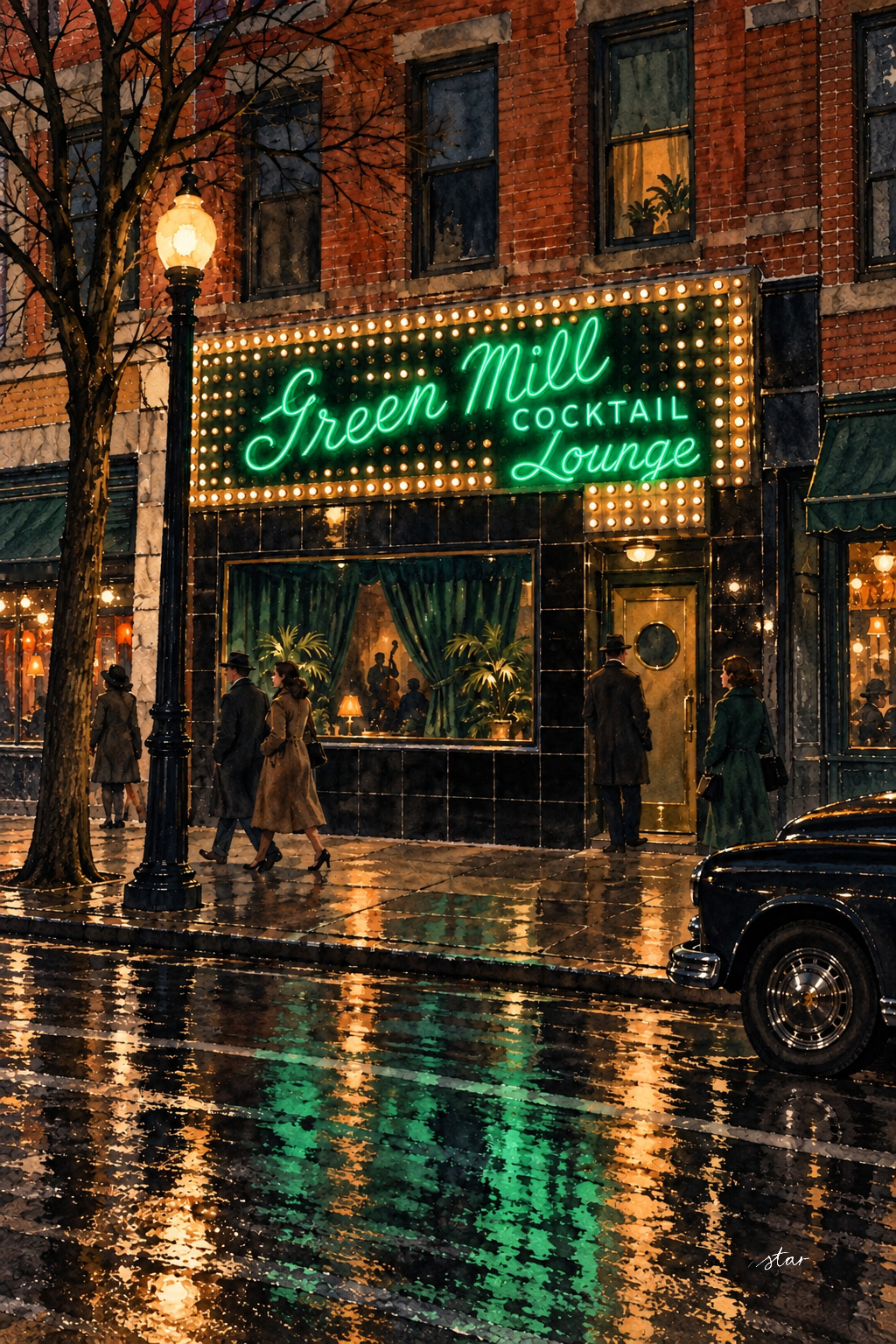
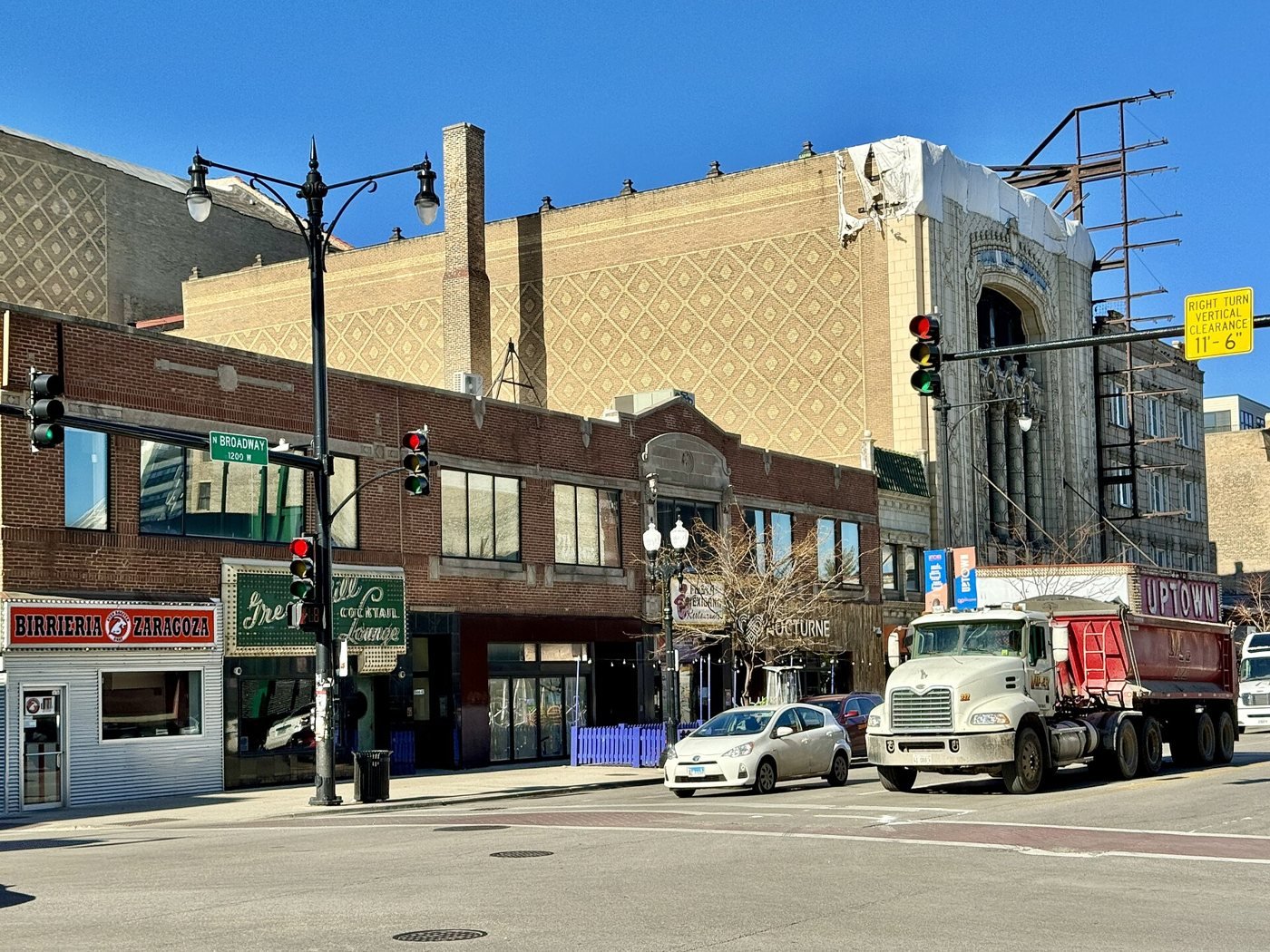
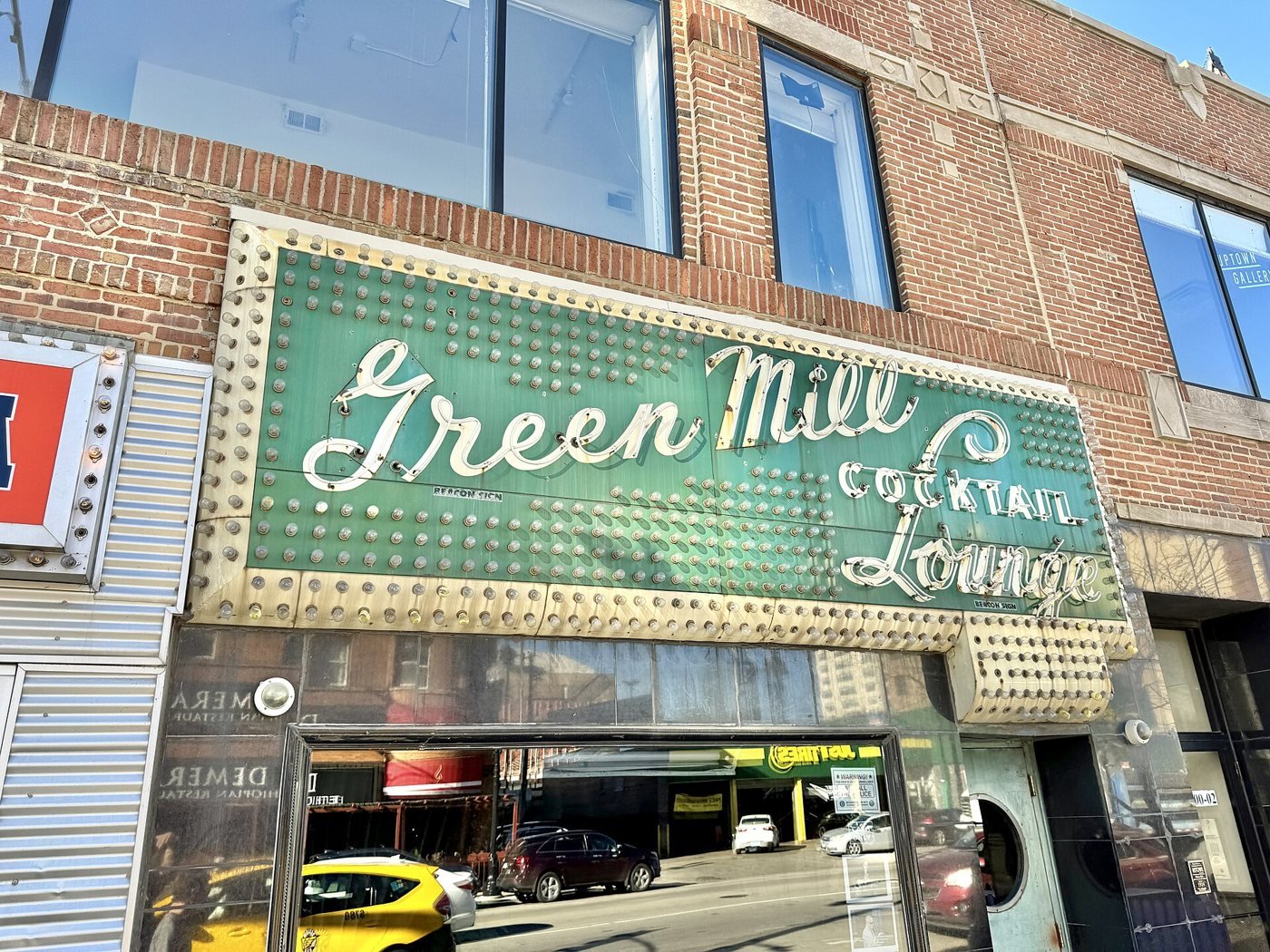
The Green Mill Cocktail Lounge sits at Broadway and Lawrence in Uptown, under a green neon sign that has become one of the best-known bar signs in Chicago. It is a jazz club, and it has been one for decades. It is also a place where people point at a curved booth and say Al Capone sat there. The room is small enough to put the musicians close to their audience, while its name recalls a much larger entertainment complex that once occupied the block.
The business changed hands in 2026, but the club, the building and the land are not interchangeable ownership questions. The same care applies to its dates. A saloon on this corner, the large Green Mill Gardens entertainment complex, and the current tavern room opened at different times. Its history follows successive rooms and businesses through neighborhood growth, Prohibition, fire and the long development of its jazz identity.
A roadhouse near the cemeteries
The predecessor was Pop Morse's Roadhouse at Lawrence and what was then Evanston Avenue, now Broadway. Historian Robert Loerzel traces a building permit to May 1897 and a saloon listing in the 1898 city directory. The widely repeated 1907 founding date does not fit those records. The old roadhouse was later demolished, so this is a history of the site and business lineage, not proof that today's room has served drinks continuously since the nineteenth century.
Green Mill Gardens
Tom Chamales developed the much larger Green Mill Gardens, which opened in 1914. Loerzel's reconstruction identifies a February 1914 permit for a two-story brick restaurant building, approximately 110 feet along Lawrence and 138 feet along Broadway. The architect was Christian S. Michaelsen, named in the records as C. S. Michaelson. Catherine Hoffman still owned the land while Chamales financed and built the venue under their agreement. The venue combined a new building with a leasehold arrangement, rather than a simple purchase of the corner by its operator.
The complex included indoor dining and entertainment as well as an outdoor garden. Its name evoked Paris's Moulin Rouge, while the large rooftop windmill made the theme visible above the street. These were not incidental decorations on an ordinary corner bar. The garden, ballroom and theatrical image made it a destination in a neighborhood becoming an entertainment center. The current lounge preserves the name, but occupies only a portion of that much larger story.
Michaelsen later partnered with Sigurd A. Rognstad in 1920. Architectural historian Julia Bachrach describes their work for entertainment venues, Chinatown institutions and Chicago's park system. Michaelsen's earlier experience included work in the offices of Arthur Heun and Howard Van Doren Shaw. The firm's later reputation for imaginative public buildings helps explain why the Green Mill's architecture deserves attention beyond its gangster associations. The Green Mill commission predates that partnership by six years and belongs to Michaelsen's independent work.
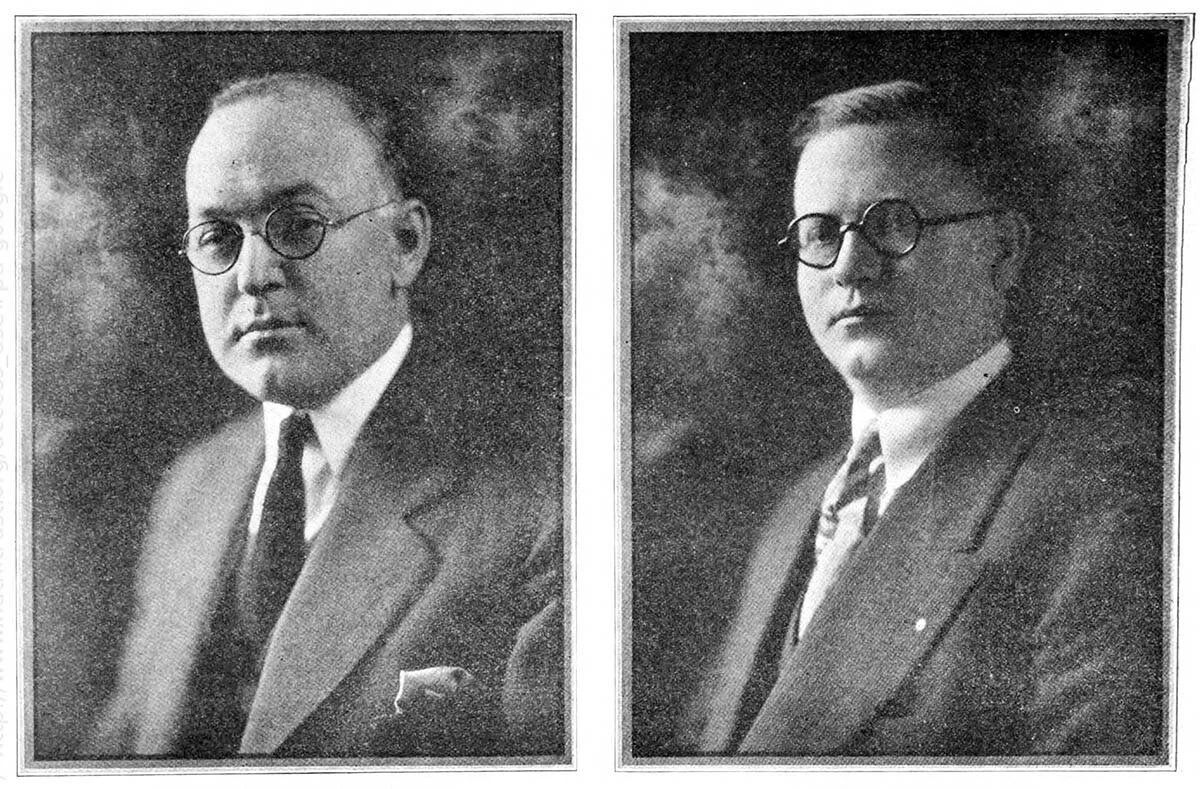
The building expanded again in the early 1920s. Loerzel identifies an August 1921 permit for an addition designed by David Saul Klafter, completed in March 1922. It filled the courtyard facing Broadway with offices, shops, a year-round ballroom and restaurant. The former garden land to the west was subsequently redeveloped for the Uptown Theatre. The adjacent theatre and the remaining commercial frontage belong to successive phases of the block's entertainment history.
Gangsters and Organized Crime
During Prohibition the larger venue repeatedly closed and reopened under different names and operators. The Montmartre Cafe was followed by the New Green Mill Cafe in 1926. Those changes complicate the familiar claim that the club simply belonged to Capone's organization throughout the period. Jack McGurn is often described as a part-owner, but contemporary statements conflict. His relationship to competing gangs and his exact financial interest in the club are less firmly established than popular accounts suggest.
Entertainer Joe E. Lewis left the Green Mill for the Rendezvous Cafe in November 1927 and was subsequently stabbed and beaten in his hotel room. A police captain told the Chicago Tribune that Lewis had reported threats from McGurn and said McGurn had an interest in the Green Mill. The club's manager, Danny Cohen, denied that ownership claim. Lewis survived; his story later inspired The Joker Is Wild. Later retellings attached a clear villain to a crime whose contemporary accounts left important questions unresolved.
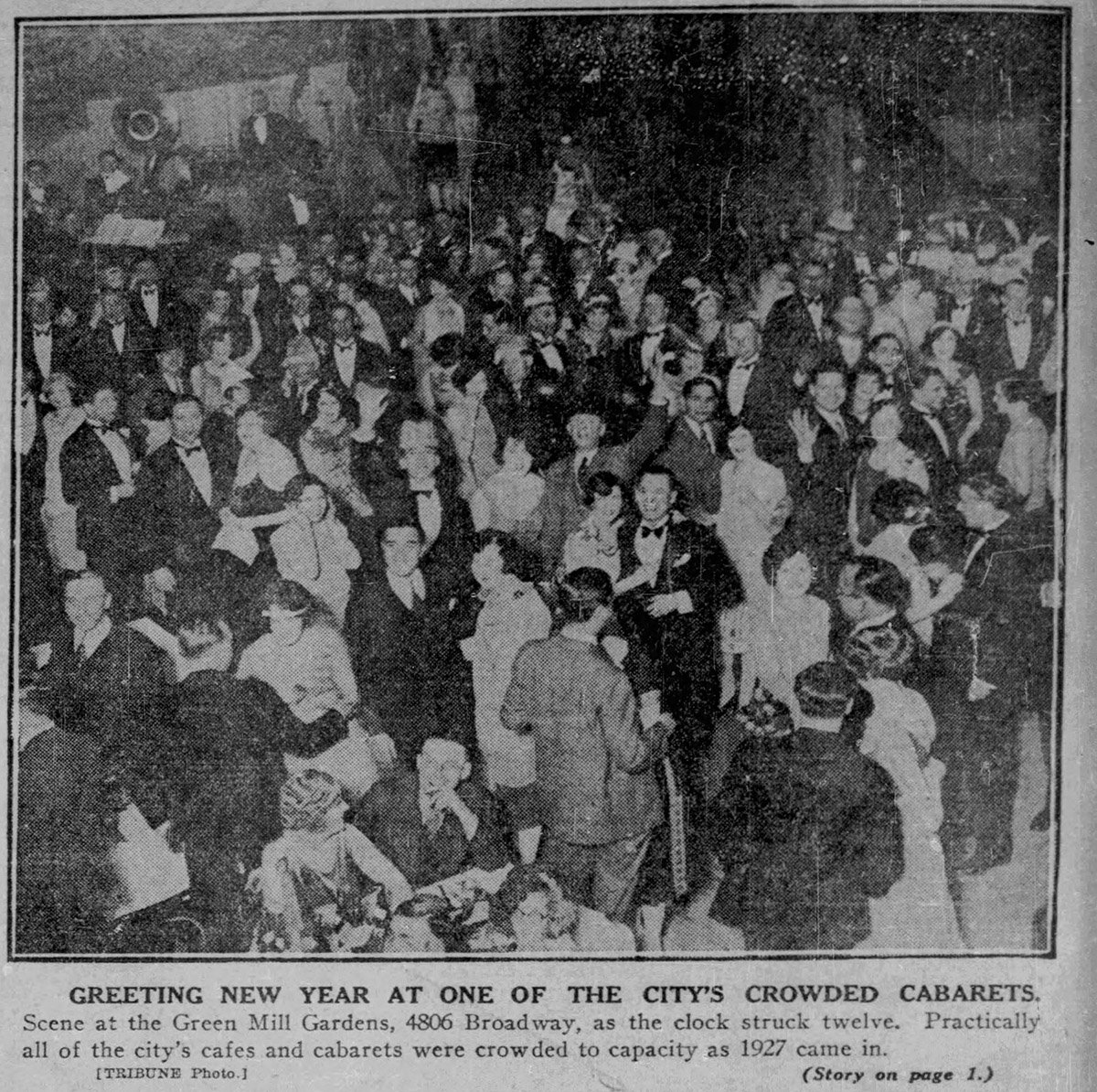
The supposed Capone booth is a particularly weak architectural claim. Loerzel places the opening of today's tavern room around 1935, after the 1933 fire, and quotes an account dating much of its interior design to 1942. Capone was already imprisoned during those years. Historian Jonathan Eig told Loerzel that he had found no primary evidence connecting Capone to the Green Mill except through the uncertain McGurn story. The booth may be part of the club's present-day lore, but its furnishings are not evidence of a Capone visit.
A trap door behind the bar leads to storage below, but that fact does not establish a Prohibition escape route. Loerzel points out that this portion of the building was not the same bar during the Prohibition years. Basement passages, ordinary service access and gangster escape tunnels are different claims. The club's current FAQ says tunnel tours are not available. The working basement remains part of the club's service space, rather than an attraction open to visitors.
Fire, repeal and a jazz reputation
A destructive fire in 1933 and subsequent rebuilding separate the earlier entertainment complex from the present tavern. By 1935 the Green Mill Tavern appears at 4802 Broadway, while a restaurant operated next door. This change of rooms matters when interpreting photographs and stories. A 1920s crowd at 4806 Broadway was not necessarily standing where today's audience sits. The old name creates continuity, but the architectural evidence also records alteration, subdivision and recovery after damage.
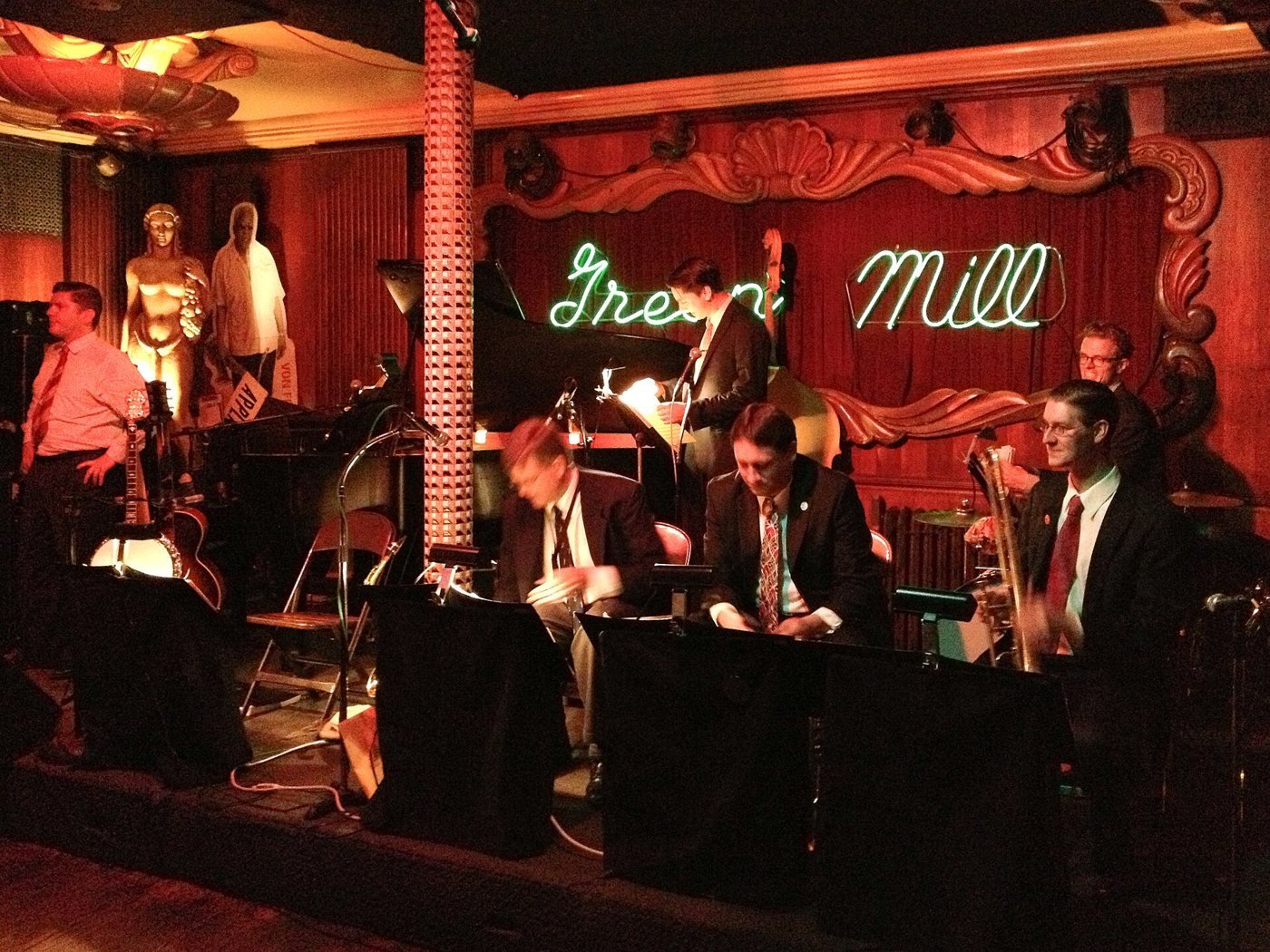
Dave Jemilo took over in 1986 and developed the modern jazz club known by generations of listeners. Its current calendar mixes jazz with spoken-word events, including the Uptown Poetry Slam and Paper Machete. Specific performances and start times should be checked rather than inferred from the bar's opening hours. The compact stage and closely grouped audience give a different kind of intimacy from the expansive garden and ballroom that once drew crowds to the block.
Visiting the Green Mill
The Green Mill is at 4802 North Broadway. Its current FAQ says no reservations and no advance tickets: seating is first-come, first-served, with a cover that varies by act. Admission is strictly 21 and older with proper identification. Payment is cash only, with an ATM on site. The club lists parking after 6:30 p.m. Ask directly about access needs and the appropriate entrance before a visit. A late-night music room is not a daytime museum or an all-ages sightseeing stop.
On November 9, 2026, the club's published hours were Monday-Thursday 4 p.m.-1 a.m., Friday 4 p.m.-4 a.m., Saturday 1 p.m.-5 a.m., and Sunday 4 p.m.-1 a.m., unless its calendar says otherwise. The calendar advertises some Sunday afternoon events earlier than those general hours. Friday and Saturday late sessions can also have their own ending times before the bar closes. Plan around the actual performance listing, not simply the last possible time to buy a drink.
In the movies
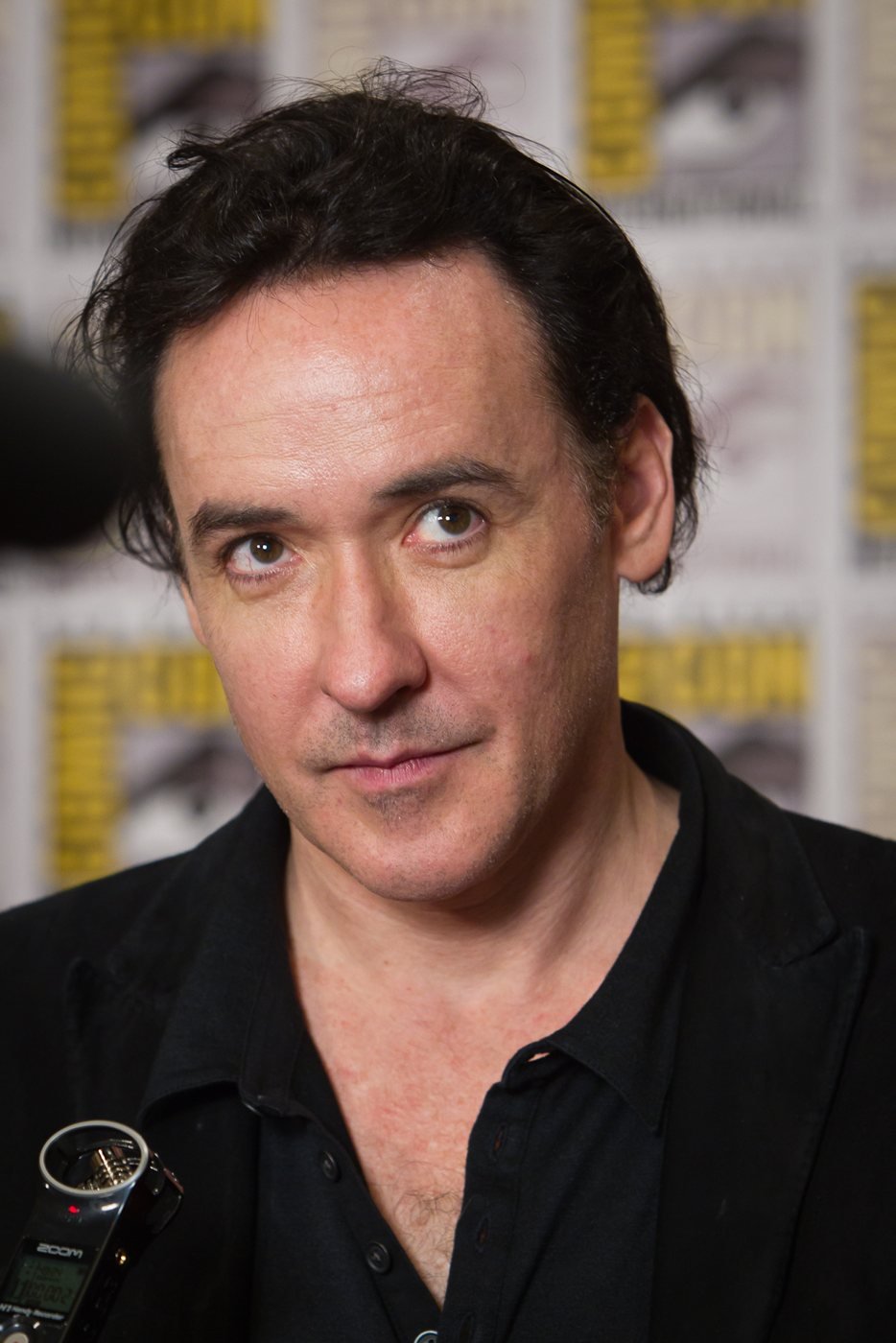
High Fidelity (2000) filmed at the Green Mill, as confirmed by the American Film Institute's account of the studio's production materials. The location guide identifies the scene as Rob Gordon, played by John Cusack, reminiscing about Laura. It is not Barry's performance venue: that scene used the Double Door in Wicker Park. Another performance by Marie De Salle was filmed at Lounge Ax. The production moved among real Chicago venues, drawing on the different rooms and musical identities of the city.
Who owns the Green Mill today?
Jason Cole and Jill Skintges, both longtime employees, took over the business from Dave Jemilo in June 2026. Block Club Chicago's contemporary report describes the return of pre-pandemic late-night jazz as the new owners sought to maintain the club's character. The announced transfer concerned the operating business; published accounts did not settle the separate real-estate title. The Green Mill name identifies an operating venue within a property whose history includes other shops and entertainment spaces.
The June 2026 Uptown Update report explicitly said it had not established whether the real estate changed hands with the business. It noted that a building sale listing was still active at that time. That dated uncertainty does not certify the current title or prove the listing remains active today. Preservation Chicago identifies the building as contributing to the Uptown Square Chicago Landmark District, protecting its exterior and roofline, but says the interior and use do not have the same landmark protection.
Where can you eat or drink at the Green Mill?
The club serves drinks but no food. Its FAQ directs customers toward nearby restaurants, so arrange dinner separately rather than arriving hungry and expecting a kitchen. Cover charge, cash for drinks and a restaurant bill are separate parts of an evening's budget. The neighborhood still provides the dinner half of a dinner-and-music evening. For a longer night, eat before the main set and check whether any late session has a separate admission arrangement.
Demera Ethiopian Restaurant is across the intersection at 4801 North Broadway. Its direct website lists Monday-Thursday 4-9 p.m., Friday-Saturday 11:30 a.m.-10 p.m., and Sunday 11:30 a.m.-9 p.m., with last seating thirty minutes before closing. Those hours were checked November 9, 2026. They make it a possible pre-music dinner stop, not an after-hours substitute for the Green Mill's bar. Call 773-334-8787 for current arrangements and allow time to reach the club before the desired set.
Sources
- Robert Loerzel: Green Mill chronology
- Robert Loerzel: founding-date evidence
- Robert Loerzel: Capone claims
- Julia Bachrach: Michaelsen and Rognstad
- Green Mill: FAQ
- Green Mill: calendar
- Block Club: new operators and late-night music
- Uptown Update: business sale and real-estate uncertainty
- Preservation Chicago: ownership and landmark limits
- American Film Institute: High Fidelity
- Film Locations: High Fidelity
- Demera: hours and address