The Chicago Water Tower: The Limestone Landmark That Survived the Fire
October 29, 2026
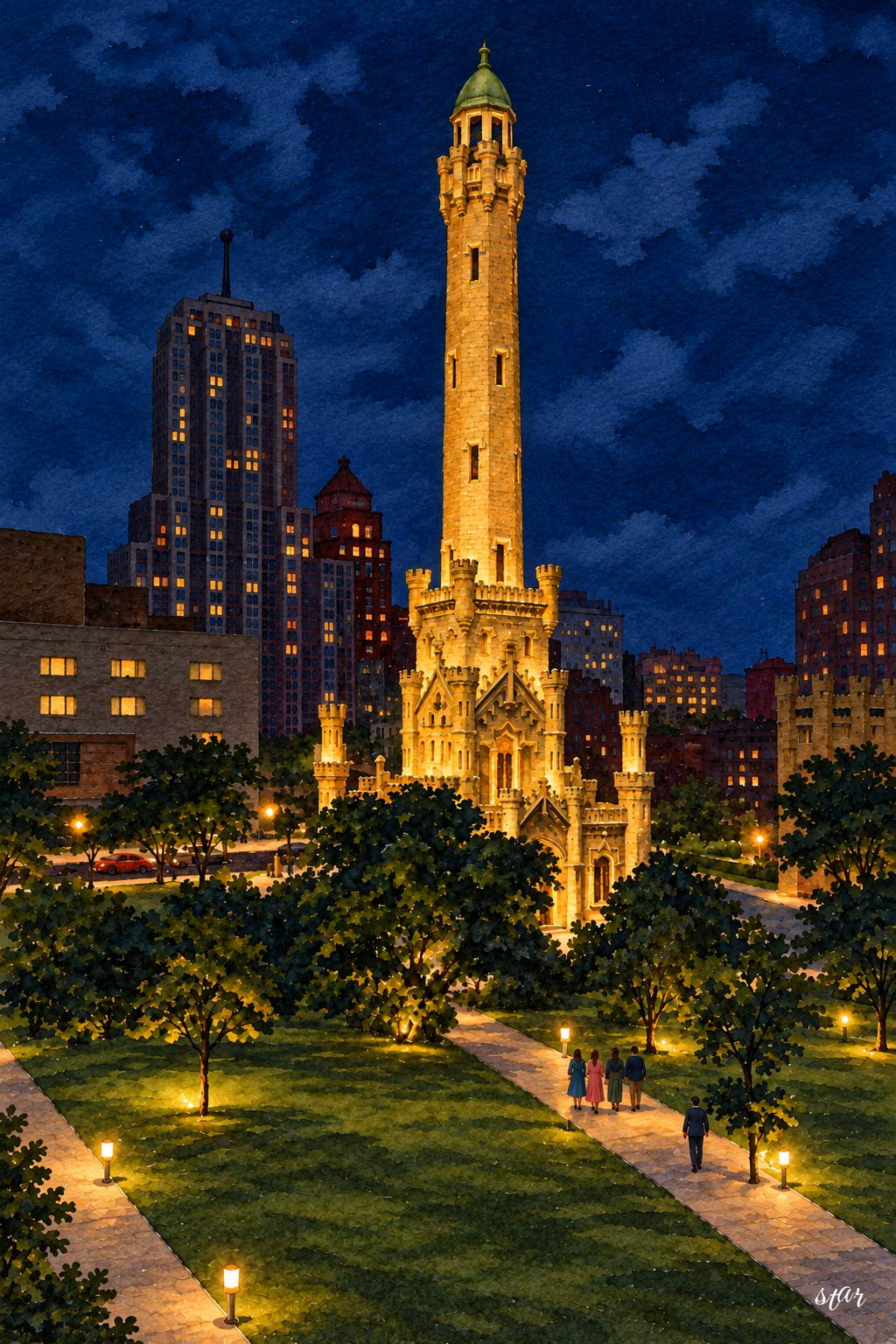
The Chicago Water Tower looks like a small limestone castle left behind on Michigan Avenue. William W. Boyington designed it as the architectural casing for a pressure-regulating standpipe, not as a medieval monument or a reservoir for drinking water. Completed in 1869, it became a symbol of endurance after the Great Chicago Fire of 1871. The tower and the pumping station across the street belong to one waterworks story, but they performed different jobs. Understanding that distinction also prevents a theater visit across the road from being confused with access inside the tower.
The exterior remains a prominent public landmark. Interior access is less certain: old gallery listings survive online, but a current exhibition and reliable November 2026 opening schedule remain unconfirmed. Check directly before making a trip for an indoor visit.
A tower to hide a standpipe
Chicago's first municipal waterworks began service in 1854. The city's landmark booklet describes a steam pump called Old Sally with an eight-million-gallon daily capacity. A second pump installed in 1857 had a twelve-million-gallon capacity; that was the second pump's capacity, not a newly combined twelve-million-gallon system total. As the city grew, polluted water near shore became an increasing concern. Engineer Ellis Sylvester Chesbrough proposed a brick-lined tunnel reaching farther beneath Lake Michigan to an intake crib, separating the intake from the most immediate shoreline contamination.
The city booklet dates the tunnel work from March 1864 to completion three years later, while the waterworks buildings continued to develop. The tower's cornerstone ceremony took place on March 25, 1867. Inside stood a pipe described in the booklet as 138 feet high and three feet in diameter. When pumps sent water through mains in surges, water could rise in the standpipe to relieve excessive pressure. The stone shell was a civic presentation of that engineering. It did not itself pump lake water, and the standpipe has long since been removed.
A Gothic shell for modern engineering
The cream-yellow limestone was quarried near Joliet. Rough-faced blocks, corner turrets and battlemented parapets make practical water infrastructure resemble a fortress. The lower rectangular stages diminish as they rise, supporting the octagonal shaft and its cupola. The city booklet gives 154 feet to the battlemented upper section; Curbed's 2019 account reports a later measured overall height of 182 feet six inches to the spire. These figures describe different endpoints, not necessarily contradictory measurements. The picturesque shell was meant to give public engineering an architectural presence, rather than to serve any defensive function.
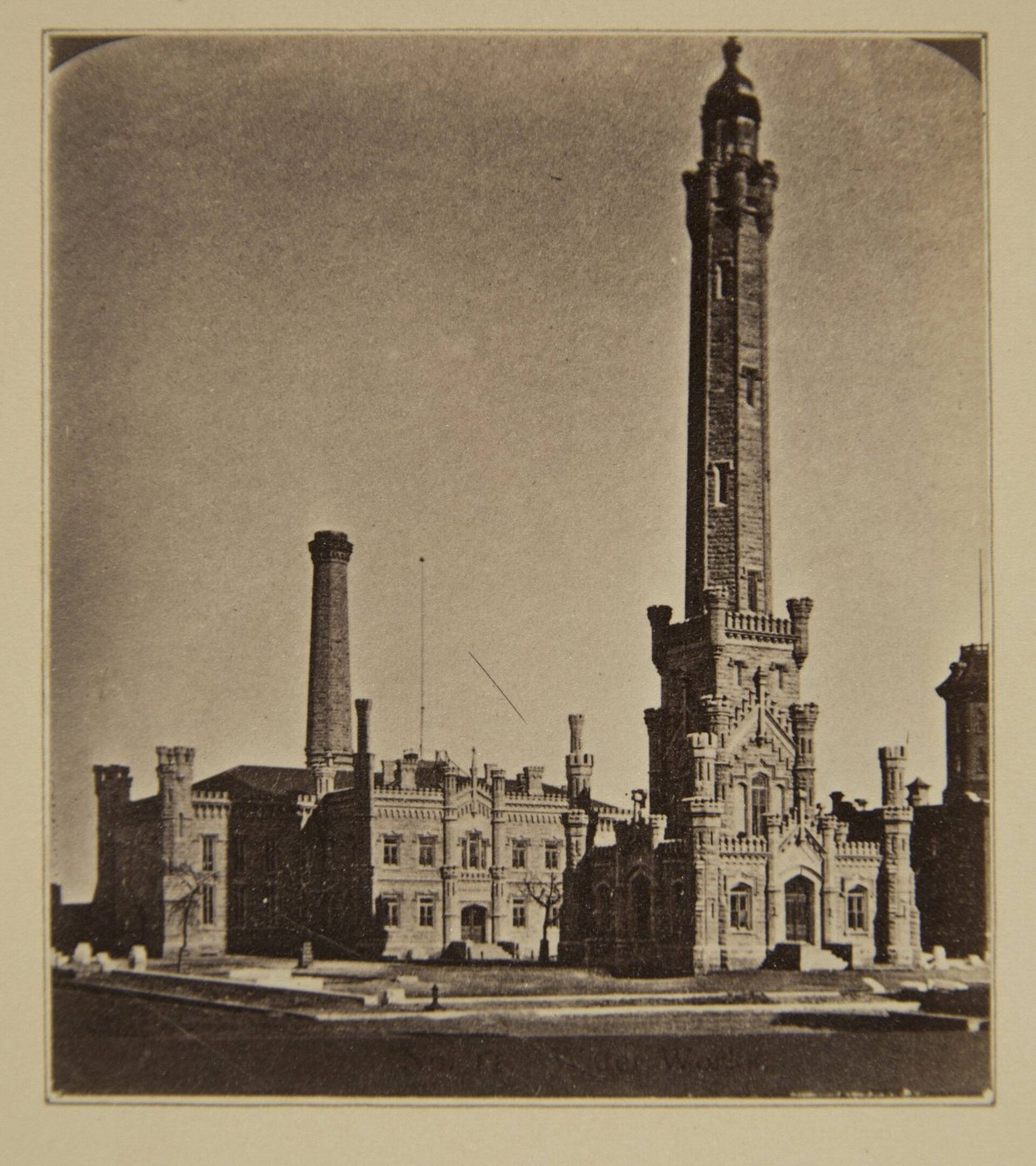
The city booklet describes a nine-foot-wide circular vestibule around the former standpipe. It also records that the tower has no basement: concrete-filled piles, heavy timbers and massive stonework supported its base. These details make the building easier to understand as infrastructure. Its small rooms and tall shaft followed the requirements of the pipe inside, while the turrets and battlements gave that machinery a deliberately theatrical public face.
The fire
During the October 1871 fire, the tower survived scarred but substantially intact. The pumping station's walls also stood, but its wooden roof burned and machinery was badly damaged. The city's 1984 history describes the water supply as virtually cut off for eight days, with partial supplies from other sources. Calling the tower the only surviving building erases other survivors; calling the waterworks undamaged confuses durable masonry with a functioning pumping system. Reference accounts also describe books donated after the fire being stored temporarily in the tower, another use unrelated to its original pressure-control job.
Threatened, then protected
The tower faced demolition proposals after modern equipment made its standpipe obsolete in 1906 and again during the widening of Michigan Avenue in 1918. Public opposition helped preserve it, with the roadway adjusted around the site. The city booklet records another proposal in 1948 to replace it with an art center, resisted by Mayor Martin Kennelley. Its survival was therefore not inevitable. Masonry repairs and later restoration campaigns replaced or reset many stones, so the familiar appearance should not be taken as proof that every visible block is untouched material from 1869.
The 1962-63 restoration shows how much work preservation required. The city account records 570 new stones and 716 old stones reset, with a remaining Joliet quarry supplying matching limestone. Stones salvaged from a demolished church were kept for later patches. This was maintenance of a functioning public memory as well as of masonry: replacement material helped sustain the outline that residents recognized. The tower survived the fire, but its long life also depended on ordinary repairs after the dramatic moment had passed.
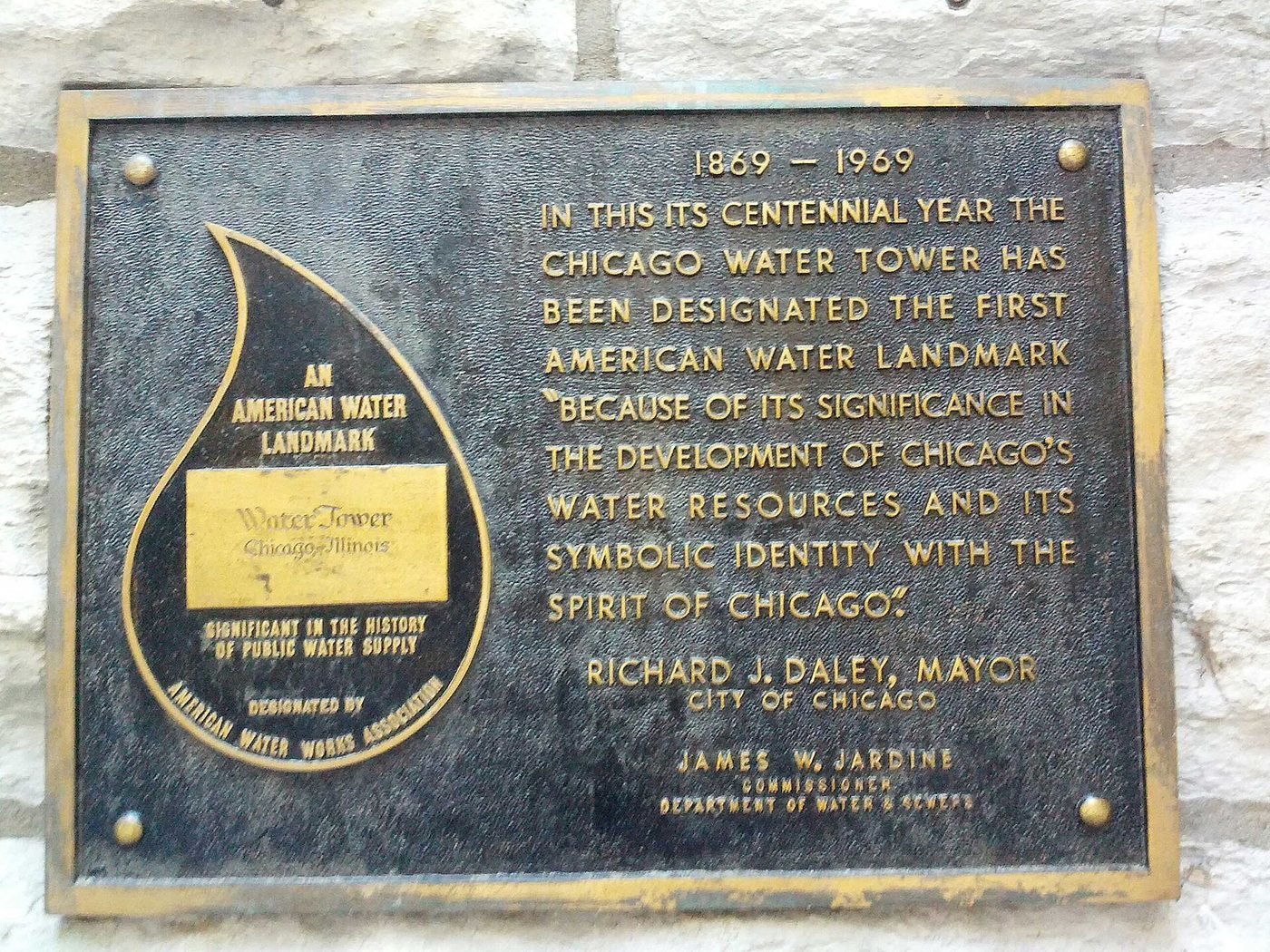
In 1969, the American Water Works Association designated the tower the first American Water Landmark. The city landmark district dates to October 6, 1971, with an expansion on June 10, 1981. These are different honors from construction completion or the earlier cornerstone centennial. The plaque photographed here records the water-industry distinction. The broader district includes the pumping station and associated buildings, not just the isolated tower that appears in postcards. Preserving that context helps explain how an ornamental landmark once belonged to a much larger working municipal system.
Critics and the architect
Oscar Wilde famously called it "a castellated monstrosity with pepper boxes stuck all over it" when visiting Chicago in 1882, although he admired the machinery. The city's booklet treats such disagreement as part of its history rather than evidence that the design lacked public importance. Boyington worked in the varied revival styles of his period; his other surviving pre-fire works include Rosehill Cemetery's entrance and the Soldiers' Home. Boyington settled in Chicago in 1853 after training in New York State. His commissions included schools, churches, hotels, office buildings and railroad stations. He became the first president of the Chicago chapter of the American Institute of Architects when it organized in 1870. Later he moved north to Highland Park and became its mayor in 1875. His waterworks belong to a career that joined architecture with public service, well before Chicago became famous for its steel-framed skyscrapers.
The pumping station across the street
The Chicago Avenue Pumping Station stands opposite, with its own address at 821 North Michigan Avenue. Lookingglass Theatre uses space within that historic complex, with its public entrance at 163 East Pearson Street. The theater's current account dates its renovated lobby, full bar and café setup to January 2025. A performance there is not an admission ticket to the freestanding tower or a tour of pumping machinery. The 1984 booklet's description of viewing the waterworks through a gallery is historical evidence, not a verified current visitor program.
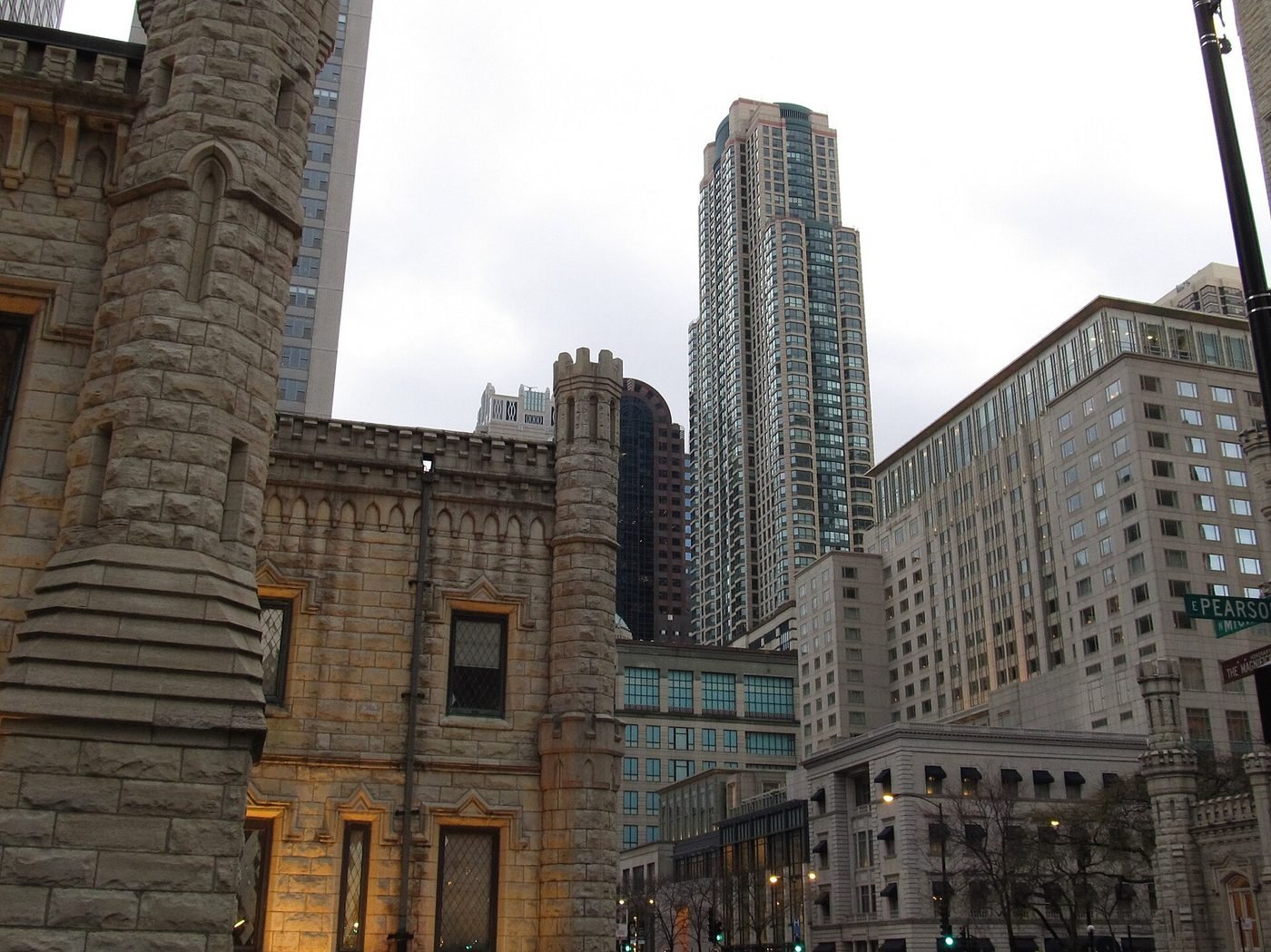
In 2014 the City Council renamed the small park around the tower the Jane M. Byrne Plaza, after the former mayor.
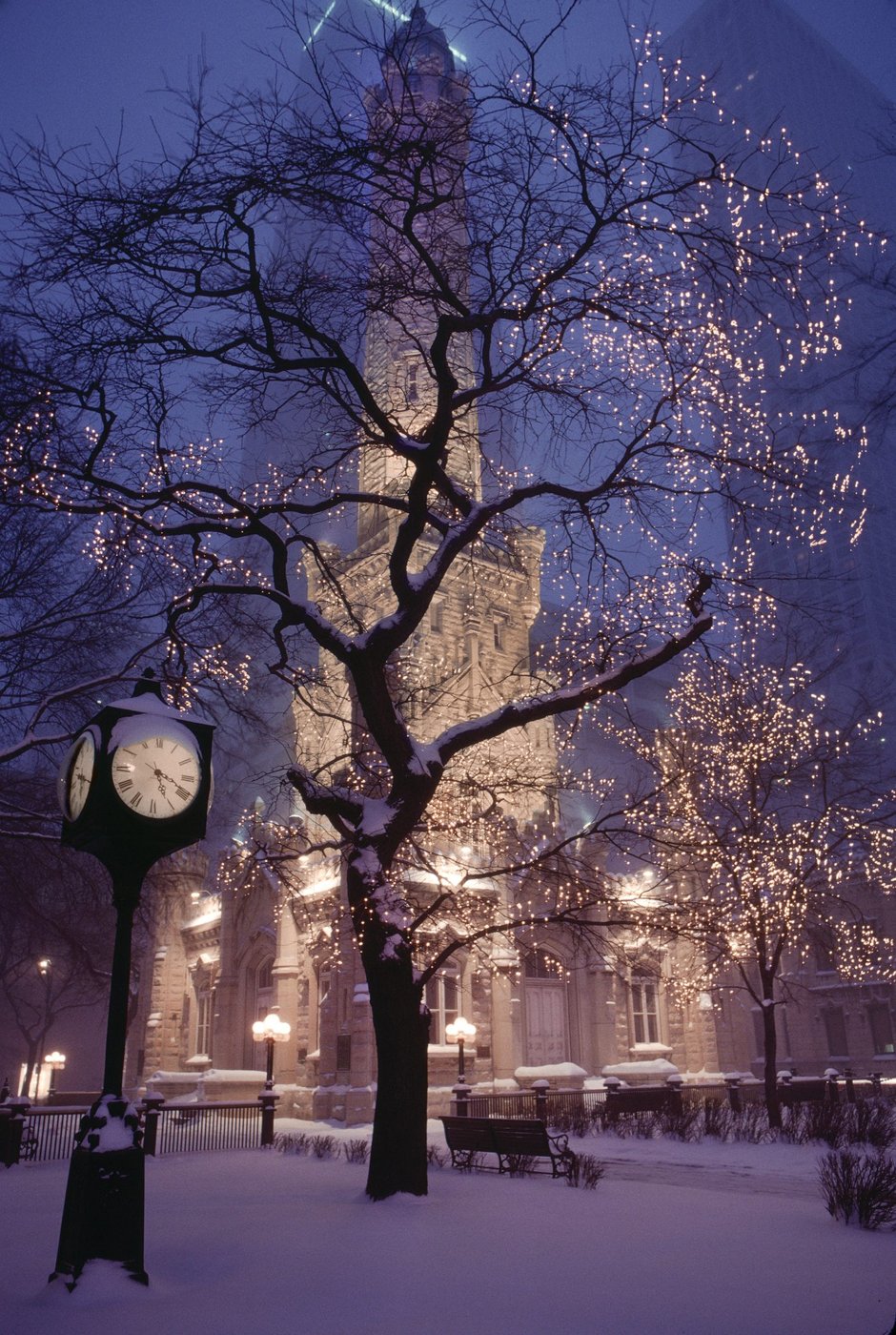
Visiting the Water Tower
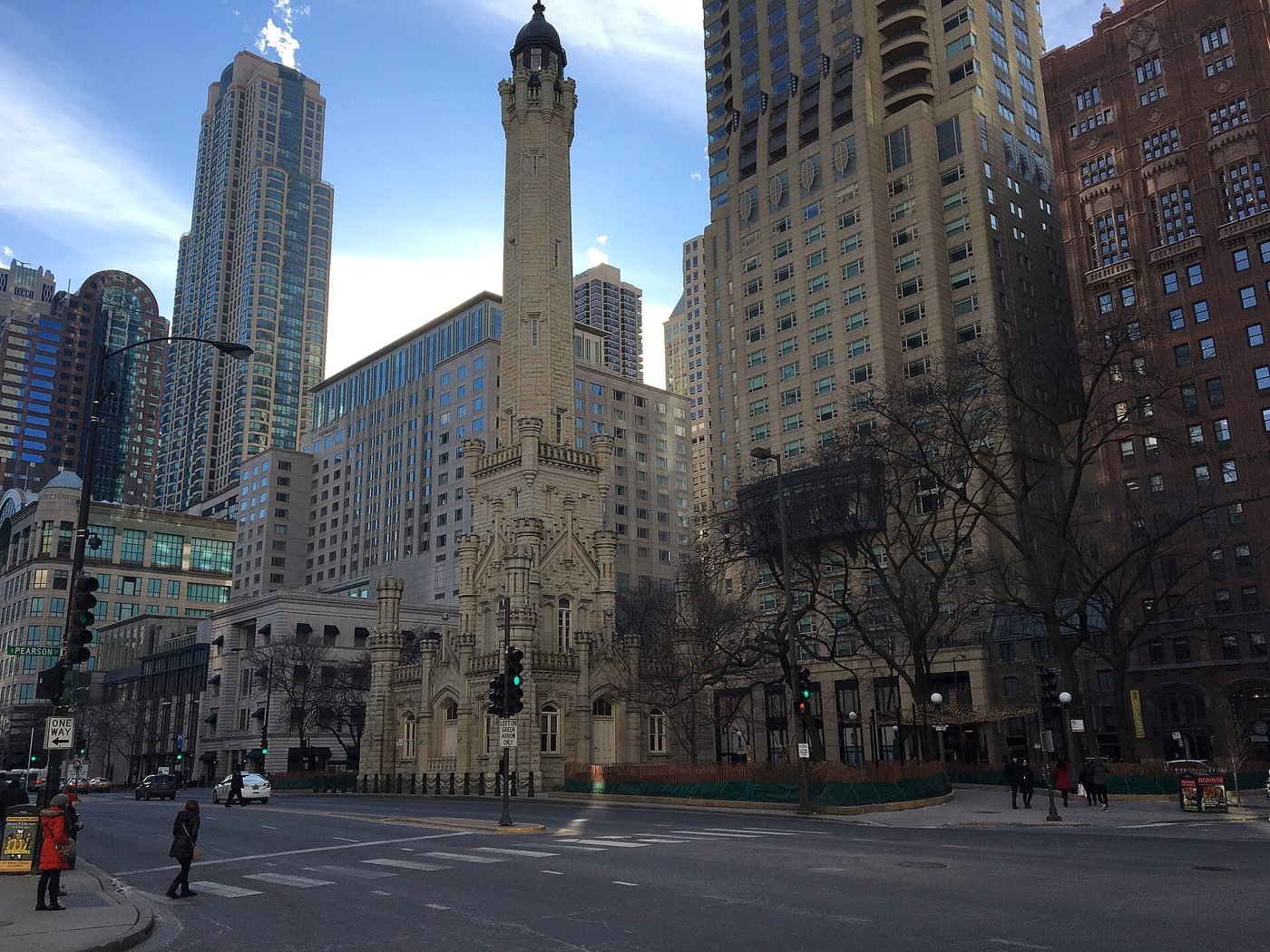
The Water Tower is at 806 North Michigan Avenue. Water Tower Arts District still lists City Gallery hours of 10 a.m.-7 p.m. weekdays and 10 a.m.-5 p.m. weekends, but those are directory claims, not verified current access. Its linked city gallery page returned the city's unavailable-page notice when checked November 9, 2026. In an April 29, 2026 account, Chicago writer Matt Maldre reported locked doors, no visible display and an exhibition trail ending around 2017. That firsthand report is not an official closure notice, but it is enough reason not to promise admission. Plan an exterior visit unless DCASE confirms interior access; neither a tower climb nor a current gallery exhibition was verified.
Famous movies with scenes shot at this building
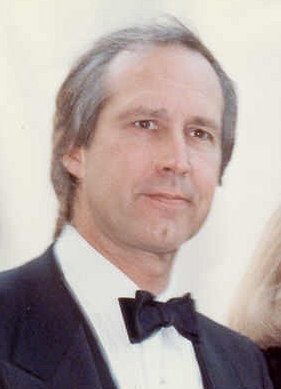
National Lampoon's Christmas Vacation (1989) includes exterior establishing views of the Water Tower. WGN's location report identifies the tower and a nearby band around the fifteen-minute point; ItsFilmedThere independently labels it an establishing shot. Chevy Chase stars as Clark Griswold, but the exterior cameo does not establish that he filmed inside this building. The photograph here is from the 1990 Academy Awards. Water Tower Place, the shopping center across the street, is a separate property and should not be substituted as evidence about the historic tower.
Who owns the Chicago Water Tower today?
The tower is a municipal building, not a privately owned observation attraction. The city's historical booklet documents its construction for Chicago's waterworks and later municipal preservation, and the former City Gallery program was run by the city's culture department. The historical city association is well documented; the exact current parcel-title details remain unverified.
The pumping station and its theater tenancy need the same distinction between ownership and occupation. Lookingglass describes its historic pumping-station home and event spaces; operating a theater there does not make the company the owner of the municipal waterworks or the freestanding Water Tower. Its theater and box-office address is Pearson Street, while its mailing office is elsewhere. Use the visitor entrance, not a correspondence address, when planning a show.
Where can you eat or drink near the Water Tower?
No food service inside the tower was verified. Across the street, Lookingglass's own menu offers drinks and snacks before shows, during intermission and afterward in its renovated lobby, not a separately confirmed all-day café schedule. Its box-office hours are also not bar hours. During productions, the office lists Tuesday-Saturday noon-6 p.m. and Sunday noon-4 p.m., closed Monday, with in-person service beginning ninety minutes before curtain. Between productions, hours change to Tuesday-Friday, 10 a.m.-4 p.m. For performance access and accessibility, consult the theater's current Visit Us page.
For a nearby independent meal, Marisol at the Museum of Contemporary Art uses 205 East Pearson Street. Its direct site lists lunch Tuesday-Friday, 11 a.m.-2 p.m.; weekend brunch, 10:30 a.m.-2 p.m.; and dinner from 5:30-9 p.m. Tuesday-Friday. Saturday dinner appears in its footer but not its About page's main hours, so confirm that evening directly. Monday is closed. The Counter lists Tuesday, 10 a.m.-7 p.m., and Wednesday-Sunday, 10 a.m.-4 p.m. Hours were checked November 9, 2026; telephone 312-799-3599.
Sources
- City: 1984 Old Chicago Water Tower District booklet
- City: Boyington biography
- Water Tower Arts District: gallery directory listing
- Matt Maldre: April 2026 on-site gallery account
- Curbed: height, fire and preservation context
- Lookingglass: current visitor and box-office guidance
- Lookingglass: lobby drinks and snacks
- Lookingglass: theater spaces and January 2025 lobby
- Marisol: direct location and hours
- Marisol: About page hours
- WGN: Christmas Vacation exterior views
- ItsFilmedThere: Christmas Vacation locations
- Wikipedia: secondary tower history